
Hey there! As a CAN Bus PLC supplier, I often get asked a bunch of technical questions. One that pops up quite a bit is, "Can a PLC send and receive data simultaneously via CAN Bus?" Well, let's dig into this topic and find out.
First off, let's quickly go over what a CAN Bus and a PLC are. The Controller Area Network (CAN) Bus is a robust vehicle bus standard designed to allow microcontrollers and devices to communicate with each other within a vehicle or other complex systems without a host computer. It's known for its reliability, high-speed data transfer, and ability to work in noisy environments. On the other hand, a Programmable Logic Controller (PLC) is an industrial computer that monitors inputs, makes decisions based on a program, and controls outputs to automate a process.
Now, back to the main question. The short answer is yes, a PLC can send and receive data simultaneously via CAN Bus. The CAN Bus protocol is a multi - master serial communication protocol, which means multiple devices on the bus can communicate with each other at the same time. This feature is crucial in industrial applications where real - time data exchange is necessary.
Let's understand how this simultaneous data transfer works. The CAN Bus uses a non - destructive bitwise arbitration mechanism. When multiple devices on the bus want to transmit data at the same time, the arbitration process determines which device gets to send its message first. Each message on the CAN Bus has a unique identifier, and the device with the lowest identifier value gets priority. This way, the bus can handle multiple transmissions without data collisions.
For a PLC, this means that it can be constantly listening for incoming data from other devices on the CAN Bus while also sending out its own data. For example, in an automated manufacturing line, a PLC might be receiving sensor data about the position and status of various components. At the same time, it can be sending control signals to actuators to move parts or adjust the speed of machinery.
There are several benefits to having a PLC that can send and receive data simultaneously via CAN Bus. Firstly, it improves the efficiency of the system. Since the PLC doesn't have to wait for its turn to send or receive data, the overall data transfer rate is increased. This is especially important in high - speed industrial processes where every millisecond counts.
Secondly, it enhances the reliability of the system. In a complex industrial environment, there are often multiple devices communicating with each other. If a PLC can't send and receive data simultaneously, it might miss important information or cause delays in the control process. With simultaneous data transfer, the system can respond more quickly to changes in the environment.
Now, let's talk about some of the factors that can affect a PLC's ability to send and receive data simultaneously via CAN Bus. One of the main factors is the CAN Bus speed. The speed of the CAN Bus can range from a few kilobits per second to one megabit per second. A higher bus speed allows for faster data transfer, but it also requires more robust hardware and a better - designed communication protocol. If the bus speed is too low, the PLC might not be able to keep up with the data flow, especially in applications where large amounts of data need to be transferred.
Another factor is the load on the CAN Bus. If there are too many devices on the bus or if the devices are sending large amounts of data, the bus can become congested. This can lead to data collisions and delays in data transfer. To avoid this, it's important to properly configure the CAN Bus and limit the number of devices on the bus.
As a CAN Bus PLC supplier, we offer a wide range of products that are designed to handle simultaneous data transfer. Our CAN Bus PLC is equipped with high - performance microcontrollers and advanced CAN Bus controllers. These components are optimized to ensure fast and reliable data transfer, even in high - load situations.
In addition to our CAN Bus PLC, we also offer other types of PLCs, such as 485 Pulse PLC and EtherCAT Bus PLC. Each of these PLCs has its own unique features and advantages, and we can help you choose the right one for your specific application.
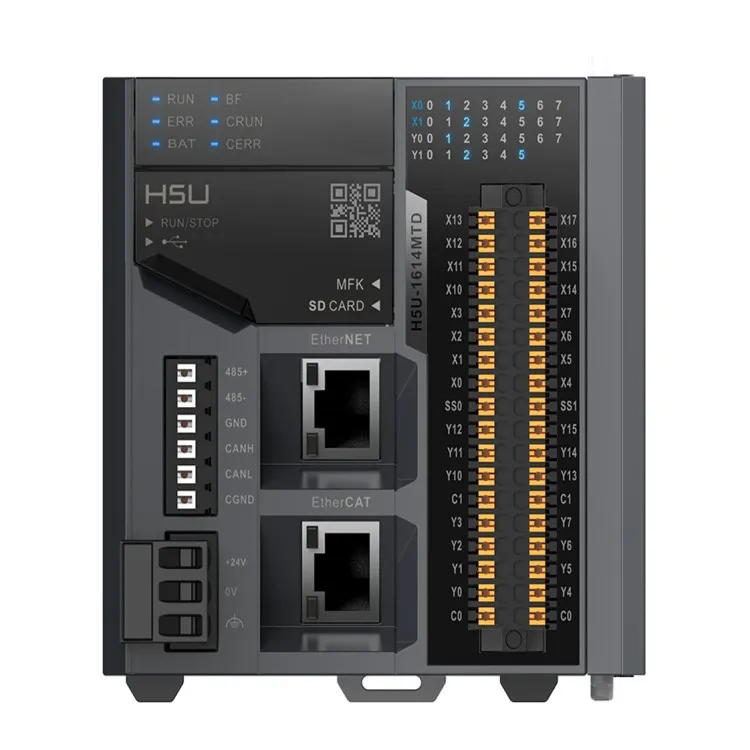
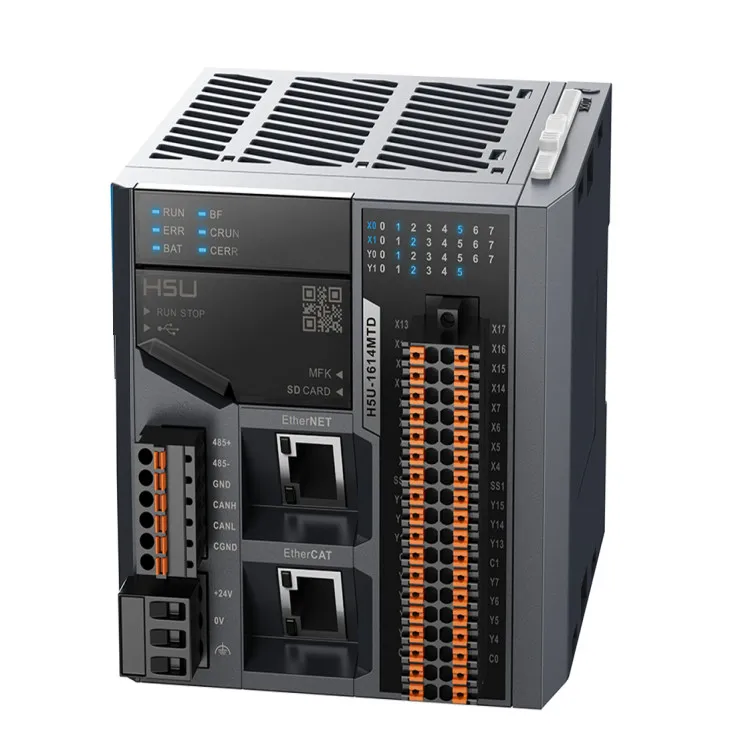
If you're looking for a reliable PLC that can send and receive data simultaneously via CAN Bus, look no further. Our team of experts is always ready to provide you with technical support and advice. Whether you're a small - scale manufacturer or a large - scale industrial enterprise, we have the products and solutions to meet your needs.
So, if you're interested in our products or have any questions about CAN Bus PLCs, don't hesitate to get in touch. We're eager to start a conversation and help you find the best PLC solution for your business. Let's work together to make your industrial automation processes more efficient and reliable.
References
- "Controller Area Network (CAN) Specification" by Bosch
- "Programmable Logic Controllers: Principles and Applications" by William Bolton