
Can a PLC use CAN Bus for boiler control?
Hey there! I'm from a CAN Bus PLC supply company, and today I wanna chat about whether a PLC can use CAN Bus for boiler control. It's a super interesting topic, especially when you're in the industrial control field like me.
Let's start with the basics. What's a PLC and what's CAN Bus? A Programmable Logic Controller (PLC) is a ruggedized computer used in industrial automation to control different processes. It's like the brain of an industrial system, making decisions based on input signals and then sending out output signals to control various devices. On the other hand, the Controller Area Network (CAN Bus) is a serial communication protocol that's widely used in automotive and industrial applications. It's known for its high reliability, real - time performance, and ability to work in noisy environments.
So, can a PLC use CAN Bus for boiler control? The answer is a big yes! There are several good reasons for using CAN Bus in boiler control with a PLC.
First off, CAN Bus offers excellent reliability. Boilers are critical equipment in many industries, and any failure in the control system can lead to serious problems, like overheating or even explosions. CAN Bus has built - in error - detection mechanisms. For example, it uses cyclic redundancy checks (CRC) to ensure that the data transmitted on the bus is correct. If there's an error, the message is re - transmitted, which helps to maintain the integrity of the control signals sent to the boiler.
Secondly, CAN Bus is great for real - time control. Boilers need to be controlled in real - time to maintain the right temperature, pressure, and other parameters. CAN Bus has a high - speed data transfer rate, which allows the PLC to quickly receive data from sensors in the boiler, like temperature sensors and pressure sensors, and then send out control signals to actuators, such as valves and pumps. This real - time communication ensures that the boiler operates safely and efficiently.
Another advantage is the multi - master capability of CAN Bus. In a boiler control system, there might be multiple devices that need to communicate with the PLC. With CAN Bus, all these devices can act as masters on the bus and communicate with each other. For example, a temperature sensor can send data directly to the PLC, and at the same time, the PLC can send control signals to a valve. This multi - master feature simplifies the wiring and the overall system design.
Now, let's talk about the implementation. When using a CAN Bus PLC for boiler control, you need to consider a few things.
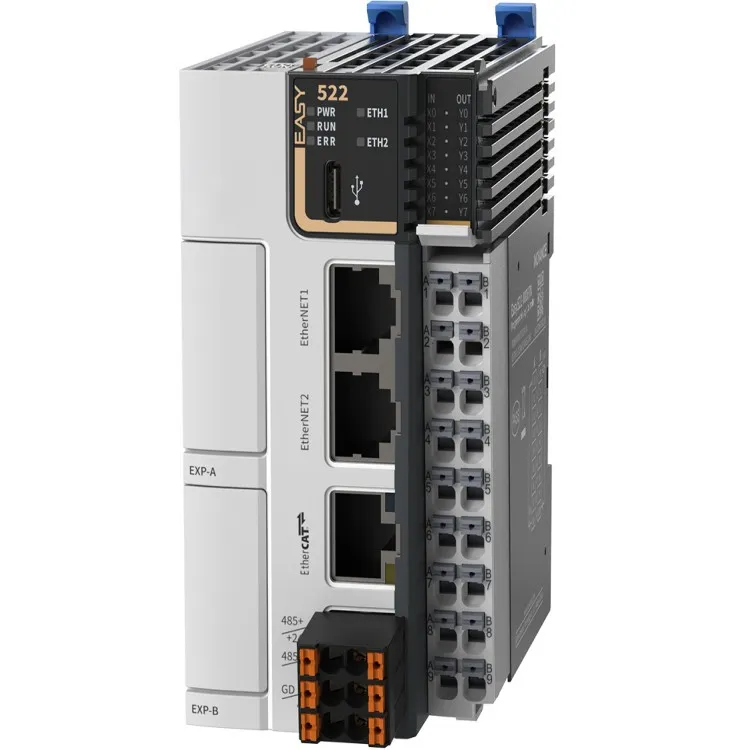
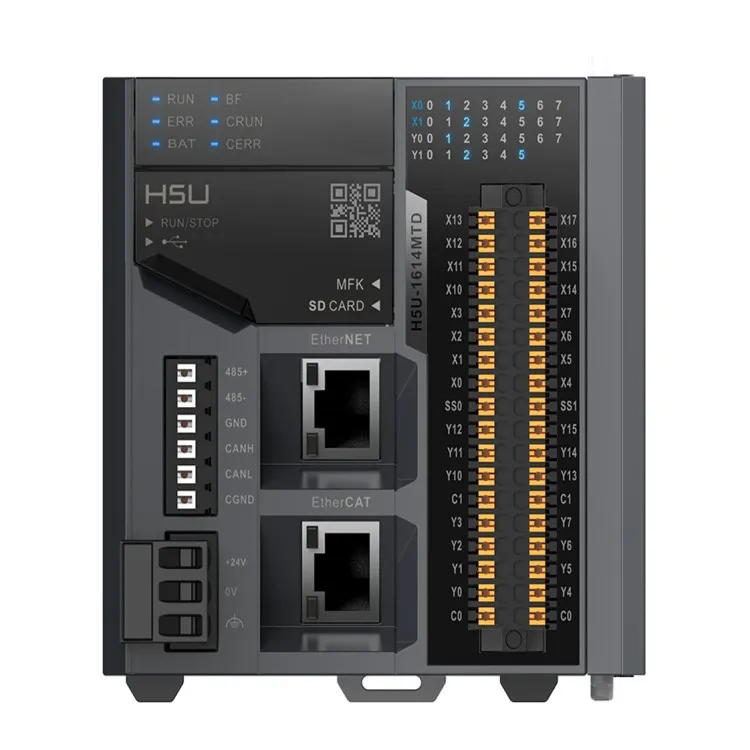
First, you need to choose the right CAN Bus PLC. There are different types of PLCs available in the market. For example, we offer the 485 Pulse PLC, which is a versatile option that can be used in various applications, including boiler control. It has the necessary input and output ports to connect to sensors and actuators in the boiler system. Another option is the Compact Mini PLC, which is small in size but still packs a punch when it comes to performance. If you need a high - speed and advanced solution, our EtherCAT Bus PLC might be the right choice. It combines the features of EtherCAT and CAN Bus, providing even better performance for complex boiler control systems.
Secondly, you need to configure the CAN Bus network properly. This includes setting the right baud rate, which determines the speed of data transfer on the bus. You also need to assign unique identifiers to each device on the bus so that the PLC can distinguish between different messages.
When it comes to programming the PLC for boiler control using CAN Bus, you'll need to write a program that can handle the data received from the sensors and generate the appropriate control signals. For example, if the temperature sensor on the boiler sends a signal indicating that the temperature is too high, the PLC should send a signal to the valve to reduce the flow of fuel or steam.
In addition to the technical aspects, there are also some benefits from a cost - effectiveness perspective. Using CAN Bus in boiler control can reduce the cost of wiring. Since CAN Bus is a serial communication protocol, it requires fewer wires compared to traditional parallel communication methods. This not only saves on the cost of the wires themselves but also on the installation and maintenance costs.
However, there are also some challenges. One of the main challenges is the complexity of the CAN Bus protocol. It requires a certain level of technical knowledge to understand and implement. But don't worry, as a CAN Bus PLC supplier, we offer technical support to help our customers with the installation, configuration, and programming of the PLCs.
Another challenge is the potential for interference. Although CAN Bus is designed to work in noisy environments, in some industrial settings with high levels of electromagnetic interference, there might be issues with data transmission. To overcome this, you can use shielded cables and proper grounding techniques.
In conclusion, a PLC can definitely use CAN Bus for boiler control. It offers many advantages in terms of reliability, real - time control, multi - master capability, and cost - effectiveness. If you're in the market for a boiler control solution, consider using a CAN Bus PLC. We have a wide range of PLCs to meet your different needs, whether it's a simple boiler system or a complex one. If you're interested in learning more or making a purchase, don't hesitate to get in touch with us for a detailed discussion about your requirements and how our products can fit your needs.
References
- Industrial Automation Handbook
- CAN Bus Technical Manuals