
Hey there! As a Siemens PLC supplier, I often get asked about how to select the right CPU for Siemens PLCs. It's a crucial decision that can significantly impact the performance and efficiency of your automation system. So, let's dive right in and break down the key factors you need to consider when making this choice.
Understanding Your Application Requirements
First things first, you gotta understand what your application actually needs. Are you dealing with a small - scale project, like controlling a single machine in a workshop? Or is it a large - scale industrial process with multiple subsystems?
For small - scale applications, you might want to look at the Siemens PLC S7 200. It's a compact and cost - effective option. These CPUs are great for simple logic control tasks, like controlling the operation of a conveyor belt or a small pump. They have a relatively low processing power but are more than enough for basic applications.
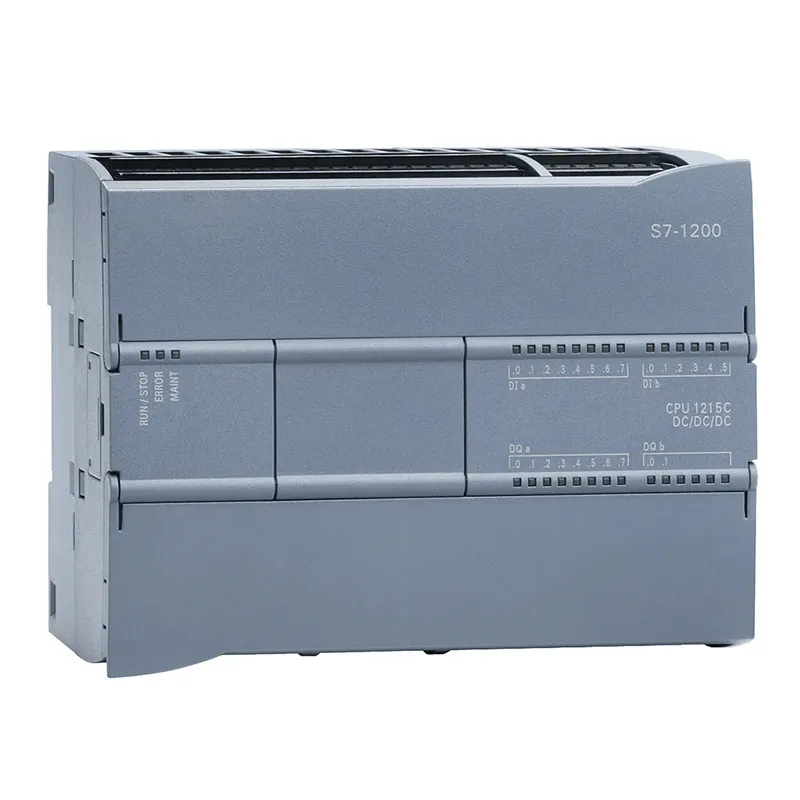
On the other hand, if you're working on a medium - sized project, the Siemens PLC S7 1200 could be a better fit. It offers more processing power and memory compared to the S7 200. This means it can handle more complex control algorithms and a larger number of I/O points. For example, in a packaging line where you need to control multiple motors, sensors, and actuators simultaneously, the S7 1200 can manage the load efficiently.
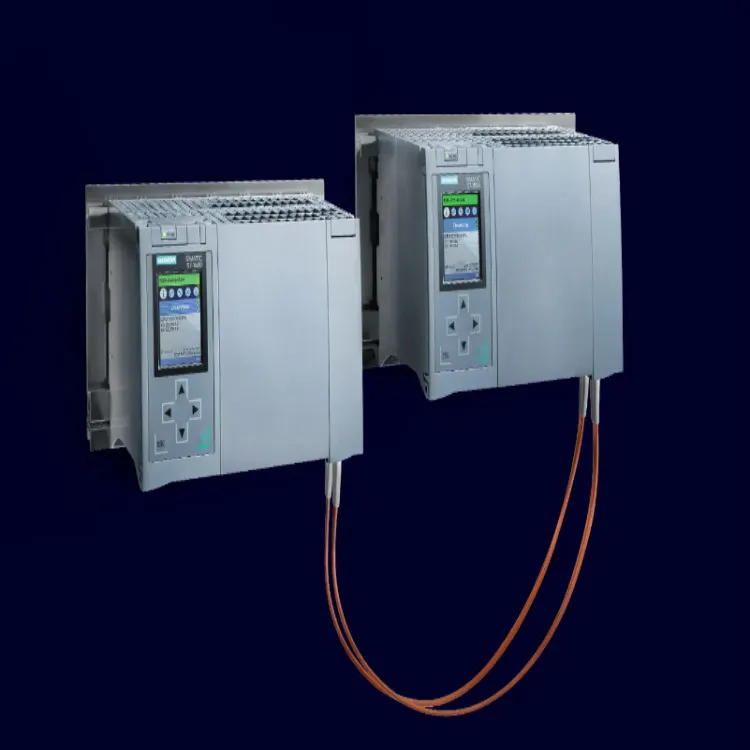
For large - scale industrial applications, such as a chemical plant or a power generation facility, the Siemens PLC S7 1500 is the way to go. These CPUs are designed for high - performance automation tasks. They have extremely fast processing speeds, large memory capacities, and support advanced communication protocols. This allows them to handle complex control strategies, real - time data processing, and integration with other systems in the plant.
Processing Power and Memory
The processing power of a CPU is measured in terms of its clock speed and the number of instructions it can execute per second. A higher clock speed generally means faster processing, but it's not the only factor. You also need to consider the architecture of the CPU. Some CPUs are optimized for specific types of tasks, like floating - point calculations or bit - level operations.
Memory is another critical aspect. You need to have enough memory to store your program code, data, and any intermediate results. If your application involves a lot of data logging or complex algorithms, you'll need a CPU with a larger memory capacity. For instance, if you're monitoring a large number of sensors and recording their data over time, you'll need sufficient memory to store all that information.
I/O Requirements
The number and type of I/O points you need are important considerations. I/O points are used to interface with external devices, such as sensors and actuators. You need to determine how many digital and analog inputs and outputs your application requires.
Digital I/O points are used for on/off control, like turning a motor on or off or detecting the state of a switch. Analog I/O points, on the other hand, are used for measuring continuous values, such as temperature, pressure, or flow rate.
Make sure the CPU you choose has enough I/O points to meet your current needs. Also, consider future expansion. You might want to add more sensors or actuators to your system later on, so it's a good idea to select a CPU that allows for easy I/O expansion.
Communication Capabilities
In today's industrial automation landscape, communication is key. You need to be able to connect your PLC to other devices, such as HMIs (Human - Machine Interfaces), SCADA (Supervisory Control and Data Acquisition) systems, and other PLCs.
Siemens CPUs support a variety of communication protocols, including Profibus, Profinet, Ethernet/IP, and Modbus. Depending on your application, you need to choose a CPU that supports the appropriate communication protocol. For example, if you're integrating your PLC with a SCADA system that uses Profinet, you'll need a CPU with Profinet communication capabilities.
Real - Time Requirements
Some applications have strict real - time requirements. For example, in a robotics application, the PLC needs to respond to sensor inputs and send control signals to the actuators within a very short time frame. In such cases, you need to choose a CPU that can provide deterministic real - time performance.
Siemens offers CPUs with different levels of real - time capabilities. Make sure to select a CPU that can meet the real - time requirements of your application.
Cost Considerations
Last but not least, cost is always a factor. You need to balance the performance and features you need with your budget. While it might be tempting to go for the most powerful CPU available, it might not be necessary for your application.
The S7 200 is the most affordable option, making it a great choice for small - budget projects. The S7 1200 offers a good balance between performance and cost, making it suitable for medium - sized projects. The S7 1500, being a high - end solution, is more expensive but offers the best performance for large - scale applications.
Conclusion
Selecting the right CPU for your Siemens PLC is a multi - faceted decision. You need to consider your application requirements, processing power, memory, I/O needs, communication capabilities, real - time requirements, and cost. By carefully evaluating these factors, you can choose a CPU that will provide optimal performance and efficiency for your automation system.
If you're still unsure about which CPU is the best fit for your project, don't hesitate to reach out. As a Siemens PLC supplier, I'm here to help you make the right choice. Whether you're just starting out on a new project or looking to upgrade an existing system, I can provide you with the expertise and support you need. Let's have a chat and figure out the best solution for you.
References
- Siemens PLC product documentation
- Industrial automation textbooks and guides