
In the dynamic landscape of the Internet of Things (IoT), IoT gateways serve as the linchpin between the vast array of IoT devices and the cloud or other backend systems. These gateways are tasked with aggregating, pre - processing, and transmitting data from numerous sensors and devices. One of the critical challenges in this process is managing the large volume of data efficiently, which is where data compression techniques come into play. As an IoT Gateway supplier, we have in - depth knowledge of various data compression techniques that are essential for optimizing data transmission and storage in IoT environments.
Lossless Compression Techniques
Huffman Coding
Huffman coding is a classic lossless data compression algorithm that assigns variable - length codes to different symbols based on their frequencies. In an IoT gateway, data from sensors often contains symbols with varying probabilities of occurrence. For example, temperature sensors may have a higher probability of reporting values within a certain range. By using Huffman coding, the IoT gateway can assign shorter codes to more frequently occurring values and longer codes to less frequent ones. This reduces the overall number of bits required to represent the data.
Let's say an IoT gateway is collecting data from multiple humidity sensors. If certain humidity levels are more common, Huffman coding can compress the data by encoding these common levels with fewer bits. This not only saves bandwidth during data transmission but also reduces the storage space required in the gateway's local memory or in the cloud.
Run - Length Encoding (RLE)
Run - length encoding is another simple yet effective lossless compression technique. It works by replacing consecutive repeated data elements with a single count and the element itself. In an IoT scenario, this can be extremely useful when dealing with sensor data that has long runs of the same value. For instance, a light sensor in a room with a stable lighting condition may report the same light intensity value for an extended period. The IoT gateway can use RLE to compress this data. Instead of transmitting the same value multiple times, it can send a count of how many times the value is repeated followed by the value itself. This significantly reduces the amount of data that needs to be transferred.
Lossy Compression Techniques
Discrete Cosine Transform (DCT)
The Discrete Cosine Transform is a widely used lossy compression technique, especially in multimedia applications. In an IoT context, it can be applied to sensor data such as image or video data from IoT - enabled cameras. DCT transforms the data from the spatial domain to the frequency domain. In the frequency domain, the high - frequency components, which often represent fine details and noise, can be discarded or quantized more aggressively without significant loss of visual information.
For example, in a smart city surveillance system, IoT gateways connected to cameras can use DCT to compress the video data before transmitting it to the central server. By reducing the amount of high - frequency data, the gateway can achieve a high compression ratio while still maintaining a reasonable level of video quality.
Vector Quantization (VQ)
Vector quantization is a lossy compression method that divides the input data into vectors and maps each vector to a representative vector from a pre - defined codebook. In an IoT gateway, this technique can be used to compress data from multiple sensors simultaneously. For example, in an industrial IoT setup where there are multiple sensors measuring temperature, pressure, and vibration, the gateway can group the data from these sensors into vectors. By finding the closest representative vectors in the codebook, the gateway can compress the data. Although some information is lost during this process, it can achieve significant compression ratios, which are crucial for IoT applications with limited bandwidth.
Adaptive Compression Techniques
Adaptive Huffman Coding
Adaptive Huffman coding is an extension of the traditional Huffman coding algorithm. In an IoT environment, the data characteristics may change over time. For example, the frequency distribution of sensor values may vary depending on the time of day or environmental conditions. Adaptive Huffman coding can adjust the code table dynamically based on the incoming data. This allows the IoT gateway to achieve optimal compression even when the data statistics change.
As an IoT gateway supplier, we have implemented adaptive Huffman coding in our gateways to handle the dynamic nature of IoT data. This ensures that our gateways can provide efficient data compression regardless of the changing data patterns.
Lempel - Ziv - Welch (LZW) Compression
LZW compression is an adaptive algorithm that builds a dictionary of strings as it processes the data. In an IoT gateway, this can be used to compress text - based sensor data, such as status messages from IoT devices. As the gateway encounters new strings of data, it adds them to the dictionary and replaces subsequent occurrences of these strings with references to the dictionary. This reduces the redundancy in the data and achieves compression.
Impact of Compression on IoT Gateway Performance
Bandwidth Optimization
One of the primary benefits of data compression in an IoT gateway is bandwidth optimization. In many IoT applications, especially those in remote areas or with limited network access, bandwidth is a scarce resource. By compressing the data, the IoT gateway can reduce the amount of data that needs to be transmitted over the network. This not only saves on data transfer costs but also improves the overall efficiency of the network. For example, in a smart agriculture system where sensors are spread across a large farm, compressing the sensor data can significantly reduce the amount of data sent over the cellular network.
Storage Efficiency
Data compression also plays a crucial role in improving storage efficiency. IoT gateways often have limited local storage capacity. By compressing the data before storing it, the gateway can store more data in the same amount of storage space. This is particularly important for applications that require long - term data retention, such as industrial monitoring systems. Compressed data can also be transferred more quickly to the cloud for long - term storage and analysis.
Processing Overhead
However, it's important to note that data compression also introduces some processing overhead in the IoT gateway. Compression algorithms require computational resources to encode and decode the data. As an IoT gateway supplier, we have optimized our gateways to balance the benefits of compression with the processing overhead. Our gateways are equipped with powerful processors and optimized software algorithms to ensure that the compression process is as efficient as possible.
Choosing the Right Compression Technique
When selecting a data compression technique for an IoT gateway, several factors need to be considered.
Data Type
The type of data being collected by the IoT devices is a crucial factor. For numerical sensor data, lossless compression techniques like Huffman coding or RLE may be more appropriate as they preserve the exact values. On the other hand, for multimedia data such as images or videos, lossy compression techniques like DCT can achieve higher compression ratios while still maintaining acceptable quality.
Application Requirements
The specific requirements of the IoT application also play a role in choosing the compression technique. For applications that require real - time data transmission, the compression algorithm should be fast and have low latency. For applications that focus on long - term data storage, achieving a high compression ratio may be more important.
Network Conditions
The network conditions between the IoT gateway and the backend system also influence the choice of compression technique. In a high - bandwidth network, the need for aggressive compression may be less urgent. However, in a low - bandwidth or unreliable network, a compression technique that can achieve high compression ratios with minimal data loss is essential.
Conclusion
As an IoT gateway supplier, we understand the importance of data compression in optimizing the performance of IoT systems. By implementing a variety of data compression techniques, our IoT gateways can efficiently manage the large volume of data generated by IoT devices. Whether it's lossless techniques for preserving data integrity or lossy techniques for achieving high compression ratios, we have the expertise to provide the best solution for your IoT application.
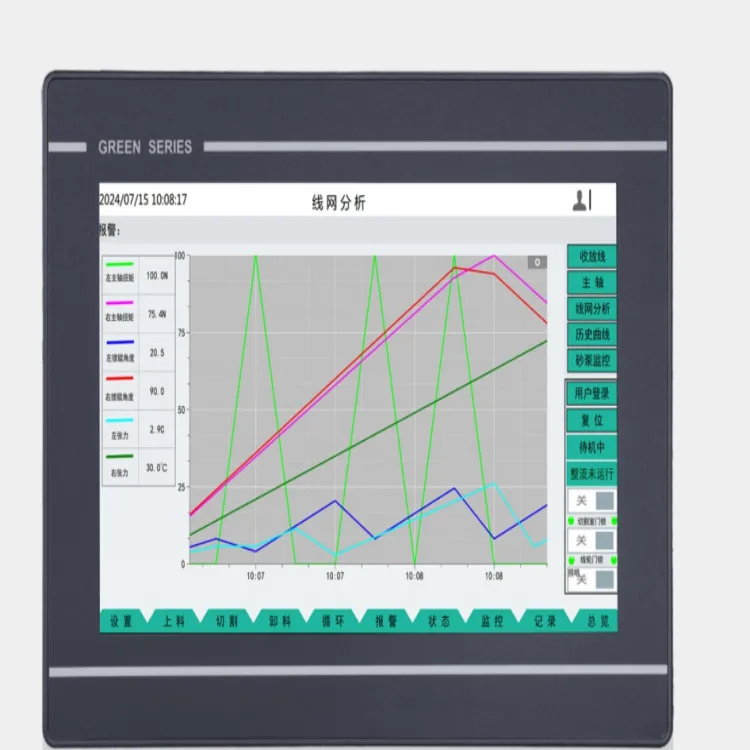
If you are interested in our IoT gateways and want to learn more about how our data compression techniques can benefit your IoT project, or if you are looking for HVAC HMI, Button - integrated HMI, or Outdoor Touch Screen solutions, please feel free to contact us for procurement and further discussions.
References
- Salomon, D. (2007). Data Compression: The Complete Reference. Springer.
- Sayood, K. (2006). Introduction to Data Compression. Morgan Kaufmann.