
In the highly competitive and regulated food and beverage industry, the need for efficient, reliable, and flexible automation solutions is more crucial than ever. IO-Link, a standardized communication protocol (IEC 61131-9), has emerged as a game-changer, offering seamless integration of sensors and actuators into industrial automation systems. As an IO-Link supplier, I've witnessed firsthand how this technology is revolutionizing the way food and beverage manufacturers operate. In this blog, I'll explore some of the typical applications of IO-Link in the food and beverage industry.
1. Quality Control and Inspection
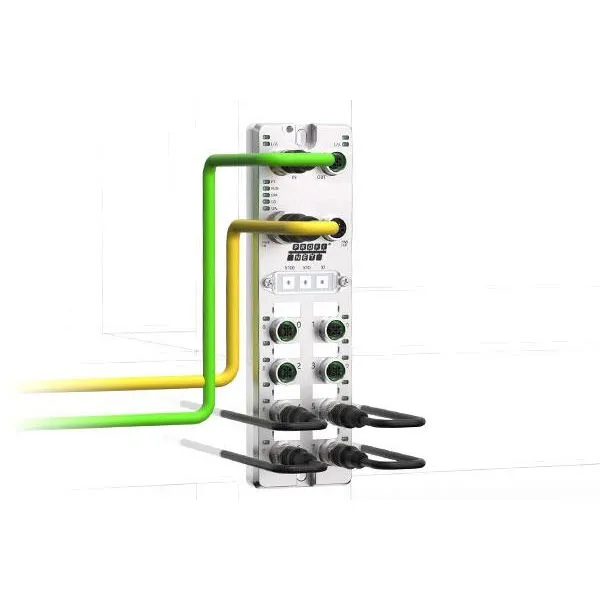
One of the primary concerns in the food and beverage industry is ensuring product quality and safety. IO-Link enables precise monitoring and control of sensors used in quality control and inspection processes. For example, optical sensors can be used to detect foreign objects, such as metal fragments or plastic pieces, in food products. These sensors can be connected to an IO-Link Device Module, which allows for easy configuration, parameterization, and data exchange.
With IO-Link, manufacturers can adjust the sensitivity of the sensors in real-time, depending on the type of product being inspected. This flexibility ensures accurate detection of contaminants while minimizing false alarms. Additionally, the data collected by the sensors can be transmitted to a higher-level control system for further analysis and decision-making. This helps in identifying trends, predicting potential quality issues, and taking proactive measures to prevent product recalls.
Another application of IO-Link in quality control is the use of vision systems. Vision sensors can be used to inspect the appearance, shape, and size of food products. IO-Link enables seamless communication between the vision sensors and the control system, allowing for fast and accurate image processing. Manufacturers can use this technology to detect defects, such as broken or misshapen products, and remove them from the production line automatically.
2. Process Monitoring and Control
IO-Link plays a vital role in process monitoring and control in the food and beverage industry. It allows for real-time monitoring of various process parameters, such as temperature, pressure, level, and flow. For instance, temperature sensors can be used to monitor the temperature of food products during cooking, cooling, and storage processes. By connecting these sensors to an IO-Link network, manufacturers can ensure that the temperature remains within the specified range, which is critical for maintaining product quality and safety.
Pressure sensors can be used to monitor the pressure in pipelines, tanks, and other equipment. IO-Link enables continuous monitoring of pressure levels and provides early warning signals in case of abnormal pressure changes. This helps in preventing equipment failures, leaks, and other safety hazards. Similarly, level sensors can be used to monitor the level of liquids in tanks and containers. IO-Link allows for accurate level measurement and automatic control of filling and emptying processes.
Flow sensors can be used to measure the flow rate of liquids and gases in pipelines. IO-Link enables precise control of flow rates, which is essential for ensuring consistent product quality and efficient production processes. By integrating flow sensors with an IO-Link network, manufacturers can optimize the use of raw materials, reduce waste, and improve overall production efficiency.
3. Packaging and Labeling
The packaging and labeling process is an important part of the food and beverage industry. IO-Link can be used to improve the efficiency and accuracy of packaging and labeling operations. For example, IO-Link-enabled sensors can be used to detect the presence and position of packages on the conveyor belt. This information can be used to control the operation of packaging machines, such as filling machines, sealing machines, and labeling machines.
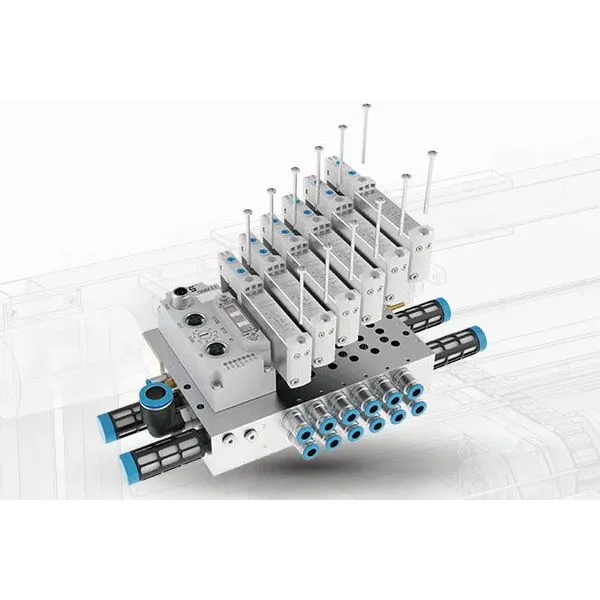
IO-Link also enables the integration of smart actuators, such as valves and motors, into the packaging and labeling process. For instance, valve islands can be used to control the flow of air and other fluids in packaging machines. Valve Islands connected via IO-Link allow for centralized control and monitoring of multiple valves, reducing the complexity of the control system and improving reliability.
In addition, IO-Link can be used to ensure accurate labeling of food products. Vision sensors can be used to read barcodes, WeChats, and other labels on packages. By connecting these sensors to an IO-Link network, manufacturers can verify the accuracy of labels and ensure compliance with regulatory requirements.
4. Hygiene and Cleaning
Maintaining high levels of hygiene is crucial in the food and beverage industry. IO-Link can be used to improve the efficiency and effectiveness of cleaning and sanitation processes. For example, IO-Link-enabled sensors can be used to monitor the cleanliness of equipment and surfaces. These sensors can detect the presence of contaminants, such as bacteria, mold, and dirt, and provide real-time feedback to the control system.
Based on the sensor data, the control system can trigger automated cleaning processes, such as spraying, rinsing, and disinfection. IO-Link also allows for remote monitoring and control of cleaning equipment, which is especially useful in large-scale production facilities. This helps in reducing manual labor, improving cleaning quality, and ensuring compliance with hygiene standards.
5. Energy Management
Energy management is an important aspect of sustainable manufacturing in the food and beverage industry. IO-Link can be used to optimize energy consumption by providing real-time data on energy usage. For example, IO-Link-enabled sensors can be used to monitor the power consumption of motors, pumps, and other equipment. This information can be used to identify energy-intensive processes and implement energy-saving measures, such as adjusting the speed of motors or optimizing the operation of pumps.
IO-Link also enables the integration of energy management systems with the overall automation system. By analyzing the energy consumption data collected by IO-Link sensors, manufacturers can develop energy management strategies, set energy-saving targets, and track their progress over time. This helps in reducing energy costs, minimizing environmental impact, and improving the sustainability of the production process.
Advantages of IO-Link in the Food and Beverage Industry
- Flexibility and Scalability: IO-Link allows for easy integration of new sensors and actuators into existing automation systems. This makes it easy to adapt to changing production requirements and expand the system as needed.
- Diagnostic Capabilities: IO-Link provides detailed diagnostic information about sensors and actuators. This helps in quickly identifying and troubleshooting problems, reducing downtime, and improving overall system reliability.
- Cost Savings: By enabling real-time monitoring and control, IO-Link helps in optimizing production processes, reducing waste, and improving energy efficiency. This leads to significant cost savings in the long run.
- Standardization: As a standardized communication protocol, IO-Link ensures compatibility between different sensors, actuators, and control systems. This simplifies the integration process and reduces the risk of compatibility issues.
Conclusion
IO-Link is a powerful technology that offers numerous benefits for the food and beverage industry. From quality control and inspection to process monitoring, packaging, hygiene, and energy management, IO-Link can be used in a wide range of applications to improve efficiency, reliability, and product quality. As an IO-Link supplier, I'm committed to providing high-quality IO-Link products and solutions that meet the specific needs of the food and beverage industry.
If you're interested in learning more about how IO-Link can benefit your food and beverage manufacturing operations, or if you're looking to purchase IO-Link products, I encourage you to reach out to me. We can have a detailed discussion about your requirements and explore the best solutions for your business.
References
- IEC 61131-9: Industrial communication networks - Profile for low-level devices - IO-Link.
- Various industry reports and studies on automation in the food and beverage industry.