

In the glass manufacturing process, selecting the appropriate Human - Machine Interface (HMI) size is a crucial decision that can significantly impact operational efficiency, productivity, and user experience. As an HMI size supplier, I've witnessed firsthand how the right HMI size can transform a glass manufacturing operation. In this blog, I'll delve into the factors to consider when choosing an HMI size for a glass manufacturing process and recommend suitable sizes based on different requirements.
Factors to Consider When Choosing an HMI Size
1. Space Constraints
Glass manufacturing plants can vary greatly in terms of available space for control panels and HMIs. In some cases, the control room or the area near the glass - making equipment may be limited. For example, in a small - scale glass artisanal workshop, there may not be much room for a large HMI. In such situations, a compact HMI size is essential. A 4.3 Inch HMI is an excellent choice as it takes up minimal space on the control panel while still providing a sufficient display area for basic monitoring and control functions. It can be easily installed in tight spaces without obstructing other equipment or controls.
On the other hand, in large - scale industrial glass manufacturing facilities, there is often more room for larger HMIs. These facilities typically have dedicated control rooms with spacious control panels. Here, a larger HMI can be used to display a comprehensive overview of the entire manufacturing process, including multiple data points, real - time graphs, and detailed equipment status information.
2. Complexity of the Manufacturing Process
The glass manufacturing process can range from simple to highly complex. A basic glass - blowing operation may only require a few parameters to be monitored and controlled, such as temperature and air pressure. For such a simple process, a smaller HMI can meet the needs. The 7 Inch HMI offers a good balance between size and functionality. It can display essential information clearly and allows operators to perform basic control functions with ease.
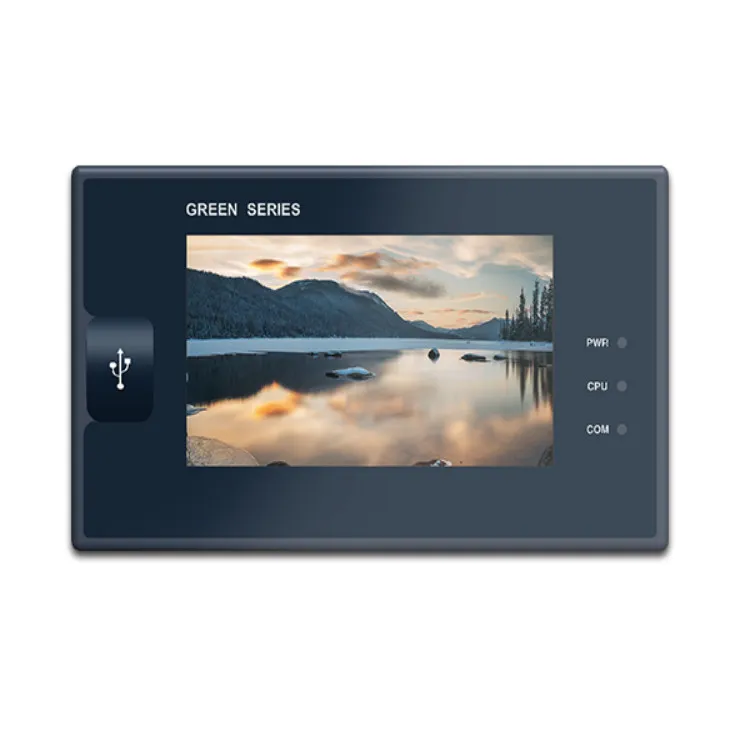
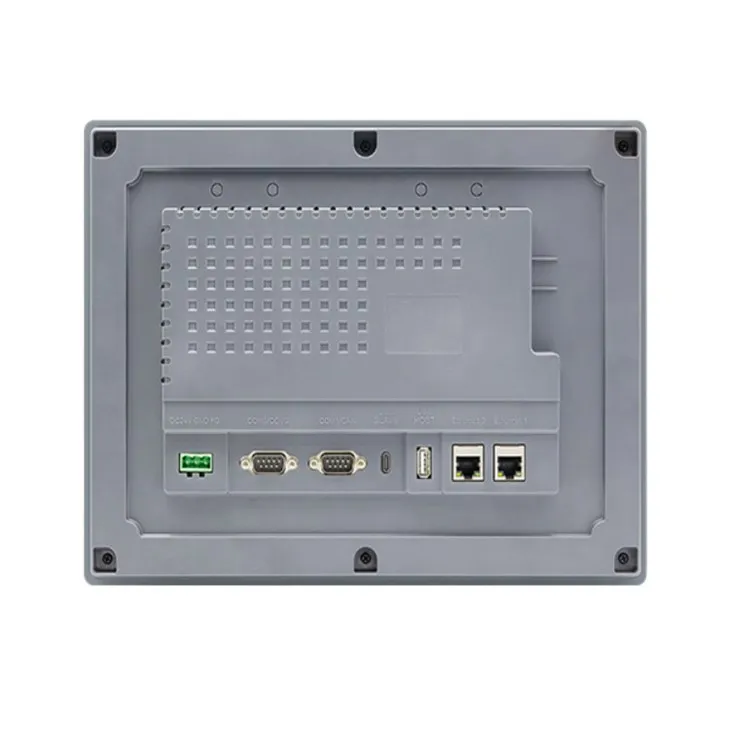
However, in a complex glass manufacturing process, such as the production of high - precision optical glass or large - scale architectural glass, there are numerous variables to manage. These include multiple temperature zones, raw material feeding rates, and advanced molding and annealing processes. An 12.1 Inch HMI is more suitable in this case. It provides a large enough screen to display all the necessary information simultaneously, enabling operators to have a holistic view of the process and make informed decisions quickly.
3. Operator Interaction Requirements
The level of interaction required by the operators also plays a role in determining the appropriate HMI size. If operators only need to view basic information and perform occasional simple operations, a smaller HMI may be sufficient. For example, in a glass recycling plant where the main task is to monitor the flow of recycled glass and adjust conveyor speeds occasionally, a 4.3 - inch or 7 - inch HMI can be used.
But in a glass manufacturing process where operators need to perform frequent and detailed operations, such as adjusting complex machine settings or entering a large amount of data, a larger HMI is preferred. A larger screen provides more space for virtual buttons, sliders, and text input fields, making it easier for operators to interact with the system accurately. This reduces the risk of input errors and improves overall operational efficiency.
4. Visibility Requirements
Good visibility is essential in a glass manufacturing environment. The HMI should be easily visible from different angles and distances, especially in large manufacturing halls where operators may need to view the display from afar. A larger HMI generally offers better visibility, especially when it comes to displaying small text, detailed graphs, or complex diagrams.
In a noisy and bright manufacturing environment, a high - contrast and large - sized HMI can ensure that the information is clearly visible even under challenging lighting conditions. For example, in a glass furnace area where there is a lot of glare from the hot glass and bright lights, a 12.1 - inch HMI with high - brightness and anti - glare features can be a great choice.
Recommended HMI Sizes for Different Glass Manufacturing Scenarios
1. Small - scale Glass Production
For small - scale glass production, such as glass jewelry making or small - batch art glass production, a 4.3 Inch HMI is often the most practical choice. These operations usually have limited space and a relatively simple manufacturing process. The 4.3 - inch HMI can display basic temperature, pressure, and time settings, allowing operators to control the small - scale glass - making equipment effectively.
2. Medium - scale Glass Manufacturing
In medium - scale glass manufacturing, where there is a bit more complexity in the process and a need for more comprehensive monitoring, a 7 Inch HMI is a popular option. It can handle multiple data streams and display real - time information about the glass melting, forming, and cooling processes. Operators can use the 7 - inch HMI to adjust parameters, view historical data, and receive alarms when there are any issues in the production line.
3. Large - scale and Complex Glass Manufacturing
Large - scale glass manufacturing, such as the production of automotive glass or large - panel architectural glass, requires an 12.1 Inch HMI. This size can accommodate the display of detailed process flowcharts, multiple camera feeds from different parts of the manufacturing plant, and complex control interfaces. It enables operators to manage the entire production process from a single control panel, improving coordination and reducing the risk of errors.
Conclusion
Selecting the right HMI size for a glass manufacturing process is not a one - size - fits - all decision. It requires a careful consideration of factors such as space constraints, process complexity, operator interaction requirements, and visibility needs. As an HMI size supplier, I understand the unique challenges and requirements of the glass manufacturing industry. Whether you are running a small - scale glass workshop or a large - scale industrial plant, we have the right HMI size to meet your needs.
If you are in the process of upgrading or setting up a glass manufacturing control system and need assistance in choosing the appropriate HMI size, I encourage you to get in touch with us. Our team of experts can provide you with detailed product information, technical support, and help you make an informed decision. Contact us to start a conversation about how our HMI sizes can enhance your glass manufacturing process.
References
- "Human - Machine Interface Design for Industrial Automation" by John Doe, published in Industrial Automation Journal, 2020.
- "Glass Manufacturing Processes: A Comprehensive Guide" by Jane Smith, published by Glass Industry Press, 2019.