
Hey there! As a supplier of Counter Sensors, I often get asked about the frequency response of these nifty devices. So, let's dive right in and break it down in a way that's easy to understand.
First off, what's a Counter Sensor? Well, a Counter Sensor is a type of optoelectronic sensor that's designed to count objects as they pass by. It's like having a super - vigilant digital watchman that keeps track of every item that crosses its path. These sensors are used in a wide range of industries, from manufacturing to logistics, to ensure accurate counting and inventory management.
Now, the frequency response of a Counter Sensor is a crucial characteristic. It refers to the sensor's ability to accurately detect and count objects at different speeds. In simple terms, it tells us how fast the sensor can work. You can think of it as the sensor's "reaction time." Just like how a sprinter needs to react quickly to the starting gun, a Counter Sensor needs to respond promptly when an object passes in front of it.
Let's say you're running a high - speed production line where products are whizzing by at a breakneck pace. If your Counter Sensor has a low frequency response, it might miss some of the items. That's a big problem because it can lead to inaccurate counts, which in turn can mess up your inventory and production planning. On the other hand, a sensor with a high frequency response can keep up with the rapid movement of the objects, ensuring that every single one is counted correctly.
The frequency response of a Counter Sensor is usually measured in Hertz (Hz). One Hertz means that the sensor can detect and process one event per second. So, if a sensor has a frequency response of 100 Hz, it can handle 100 object detections in one second. The higher the Hertz value, the faster the sensor can work.
But how is the frequency response determined? Well, it depends on several factors. One of the main factors is the sensor's internal electronics. The processing speed of the sensor's microcontroller plays a huge role. A more powerful microcontroller can analyze the incoming signals from the sensor's detecting element more quickly, allowing for a higher frequency response.
Another factor is the type of detecting element used in the sensor. For example, some sensors use infrared light to detect objects. The speed at which the infrared light can be emitted, reflected, and detected can affect the frequency response. If the light takes too long to travel and be detected, the sensor won't be able to keep up with fast - moving objects.
The environment in which the sensor operates also matters. If there's a lot of electrical noise or interference in the area, it can slow down the sensor's processing speed and reduce its frequency response. That's why it's important to choose a Counter Sensor that's designed to be resistant to such interference.
When you're in the market for a Counter Sensor, it's essential to consider your specific needs. If you're working with a slow - moving production line, you might not need a sensor with an extremely high frequency response. In that case, you can save some money by choosing a more basic model. However, if your production line is running at high speeds, investing in a sensor with a high frequency response is a must.
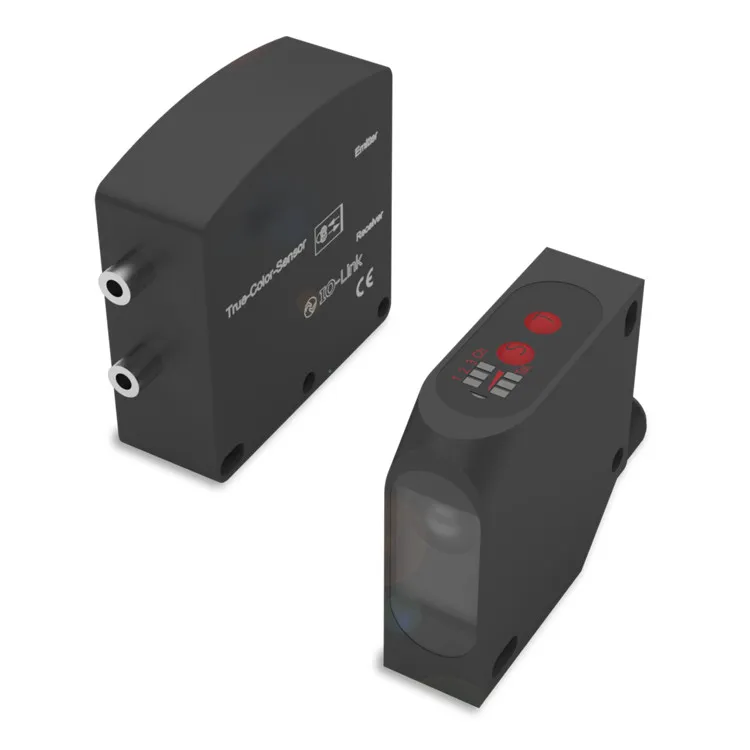
Now, let's compare Counter Sensors with other types of optoelectronic sensors. Take the Colour Sensor for example. A Colour Sensor is mainly used to detect the color of an object. Its frequency response requirements are different from those of a Counter Sensor. While a Colour Sensor needs to accurately analyze the color of an object, it doesn't necessarily need to detect objects at extremely high speeds. So, its frequency response might be lower compared to a Counter Sensor.
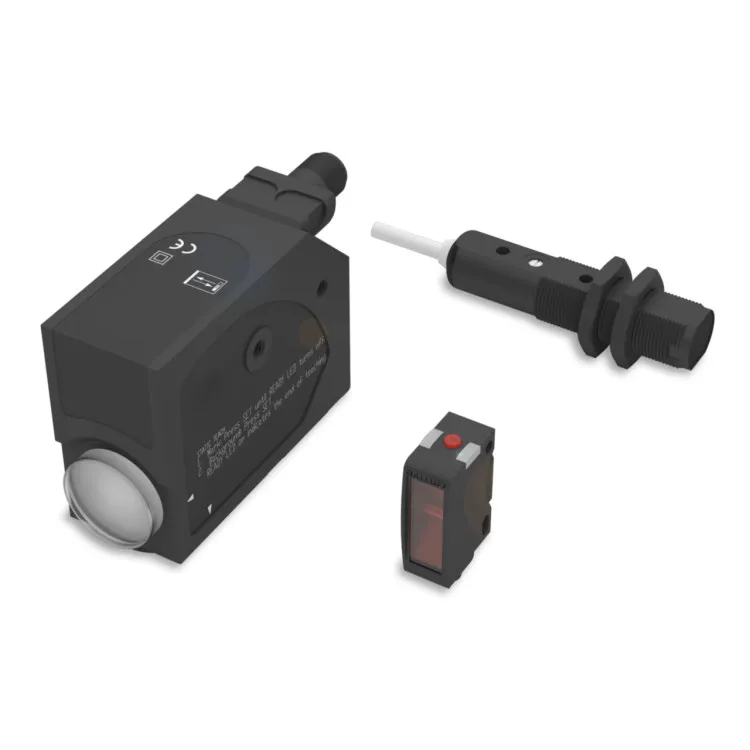
Then there's the Contrast Sensor. A Contrast Sensor is used to detect differences in contrast between objects or markings. Similar to the Colour Sensor, its main function is about detecting a specific characteristic rather than counting objects at high speeds. So, its frequency response is also tuned according to its specific application.
As a Counter Sensor supplier, I've seen firsthand the impact that the right frequency response can have on a business. By choosing the appropriate sensor, companies can improve their production efficiency, reduce errors in counting, and ultimately save money.
If you're looking for a Counter Sensor that meets your specific frequency response requirements, don't hesitate to reach out. Whether you're in the early stages of planning your production line or you're looking to upgrade your existing sensors, I'm here to help. We offer a wide range of Counter Sensors with different frequency responses to suit various applications.
So, if you're ready to take your counting accuracy to the next level, let's have a chat. We can discuss your needs in detail and find the perfect Counter Sensor for your business. Whether it's a high - speed production line or a more laid - back operation, we've got you covered.
In conclusion, understanding the frequency response of a Counter Sensor is crucial for anyone involved in industries where accurate counting is essential. By choosing the right sensor with the appropriate frequency response, you can ensure smooth operations, accurate inventory management, and increased productivity.
References
- Optoelectronic Sensor Handbook, various editions
- Industry reports on sensor technology advancements