
In the realm of industrial automation, Programmable Logic Controllers (PLCs) stand as the cornerstone of efficient and reliable control systems. As a prominent general PLC supplier, I've witnessed firsthand the transformative power of these devices across various industries. One fundamental aspect that often piques the interest of engineers, technicians, and industry enthusiasts is the memory structure of a general PLC. Understanding this structure is crucial for optimizing PLC performance, programming effectively, and troubleshooting issues. In this blog post, I'll delve into the intricacies of the memory structure of a general PLC, shedding light on its different components and their functions.
Overview of PLC Memory
At its core, a PLC's memory can be thought of as a digital storage space where various types of data are stored and processed. This memory is divided into several distinct areas, each serving a specific purpose. The main types of memory in a general PLC include system memory, user memory, and data memory. Let's take a closer look at each of these areas.
System Memory
System memory is the heart of the PLC, responsible for storing the operating system and other essential software that enables the PLC to function. This memory area contains the firmware, which is the low - level software that manages the hardware resources of the PLC, such as the CPU, input/output (I/O) modules, and communication interfaces. The system memory also stores the boot code, which initializes the PLC when it is powered on.
The operating system in the system memory manages tasks such as task scheduling, interrupt handling, and communication protocol management. It ensures that the PLC can execute user - programmed logic in a timely and efficient manner. System memory is typically non - volatile, meaning that its contents are retained even when the power is turned off. This ensures that the PLC can boot up and resume normal operation without losing its configuration.
User Memory
User memory is where the user - programmed logic resides. This is the code that engineers write to control the industrial process. The user memory can be further divided into program memory and data memory related to the user program.
Program memory stores the ladder logic, function block diagrams, structured text, or other programming languages used to define the control logic. The size of the program memory determines the complexity of the control program that can be implemented. For example, a large - scale manufacturing process with multiple interrelated operations may require a PLC with a substantial program memory capacity.
The programming languages used in user memory are designed to be intuitive for industrial engineers. Ladder logic, for instance, resembles electrical relay circuits, making it easy for those with a background in electrical engineering to understand and program. As technology advances, modern PLCs support more advanced programming languages that allow for more complex and flexible control strategies.
Data Memory
Data memory in the context of a PLC is used to store variables that are used in the control program. These variables can represent input and output values, intermediate results, and status flags. Data memory can be volatile or non - volatile.
Volatile data memory loses its contents when the power is turned off. It is used to store temporary data that is constantly updated during the operation of the PLC. For example, the current value of a temperature sensor connected to an input module is stored in volatile data memory. This data is used by the control program to make decisions, such as whether to turn on a cooling system.
Non - volatile data memory, on the other hand, retains its contents even when the power is off. It is used to store important configuration data, such as setpoints, calibration values, and historical data. For example, the set temperature for a manufacturing process can be stored in non - volatile data memory. This ensures that the process can resume with the correct settings after a power outage.
Memory Organization and Addressing
The memory in a PLC is organized in a structured way, and each memory location has a unique address. Addressing is used to access and manipulate the data stored in the memory. PLCs typically use different addressing schemes depending on the type of data and the programming language.
Bit - Level Addressing
In many PLCs, bit - level addressing is used to access individual bits in the memory. This is particularly useful for handling digital inputs and outputs. For example, an input module may have several digital input channels, and each channel is represented by a single bit in the memory. Engineers can use bit - level addressing to read the state of these inputs and use them in the control logic.
Word - Level Addressing
Word - level addressing is used to access groups of bits, typically 16 or 32 bits. Words are used to store numerical values, such as analog input values or counter values. For example, an analog input module may convert an analog signal (such as a voltage or current) into a digital value, which is then stored as a word in the memory. Word - level addressing allows engineers to perform arithmetic and logical operations on these numerical values.
Impact of Memory Structure on PLC Performance
The memory structure of a PLC has a significant impact on its performance. A well - designed memory structure can improve the speed and efficiency of the control program execution.
Execution Speed
The size and organization of the program memory can affect the execution speed of the control program. If the program memory is too small, the control program may need to be divided into smaller segments, which can lead to longer execution times. On the other hand, a large and well - organized program memory allows for faster access to the program code, reducing the time it takes to execute the control logic.
Data Access
Efficient data access is crucial for real - time control applications. The memory structure should allow for quick access to input and output data, as well as intermediate variables. A good addressing scheme and proper memory organization can minimize the time it takes to read and write data, ensuring that the PLC can respond to changes in the industrial process in a timely manner.
Different Types of PLCs and Their Memory Structures
There are various types of PLCs available in the market, each with its own memory structure characteristics. Some of the common types include CAN Bus PLC, 485 Pulse PLC, and EtherCAT Bus PLC.
CAN Bus PLCs are known for their robust communication capabilities. They often have a memory structure optimized for handling data transfer over the CAN bus. The system memory may contain specialized communication protocols for CAN bus communication, and the data memory may be configured to store and manage CAN bus messages efficiently.
485 Pulse PLCs are designed for applications that require high - speed pulse counting and control. Their memory structure may be tailored to handle pulse - related data, such as pulse counts, pulse frequencies, and pulse widths. The program memory may include dedicated functions for pulse control algorithms.
EtherCAT Bus PLCs offer high - speed Ethernet - based communication. Their memory structure is optimized for fast data transfer over the EtherCAT network. The system memory may support advanced EtherCAT protocols, and the data memory may be organized to buffer and process EtherCAT data packets quickly.
Conclusion and Call to Action
In conclusion, understanding the memory structure of a general PLC is essential for anyone involved in industrial automation. It provides insights into how the PLC stores and processes data, which in turn affects its performance and functionality. Whether you're an engineer looking to optimize a control program, a technician troubleshooting a PLC issue, or a business owner considering a PLC for a new industrial project, a solid understanding of the memory structure is invaluable.
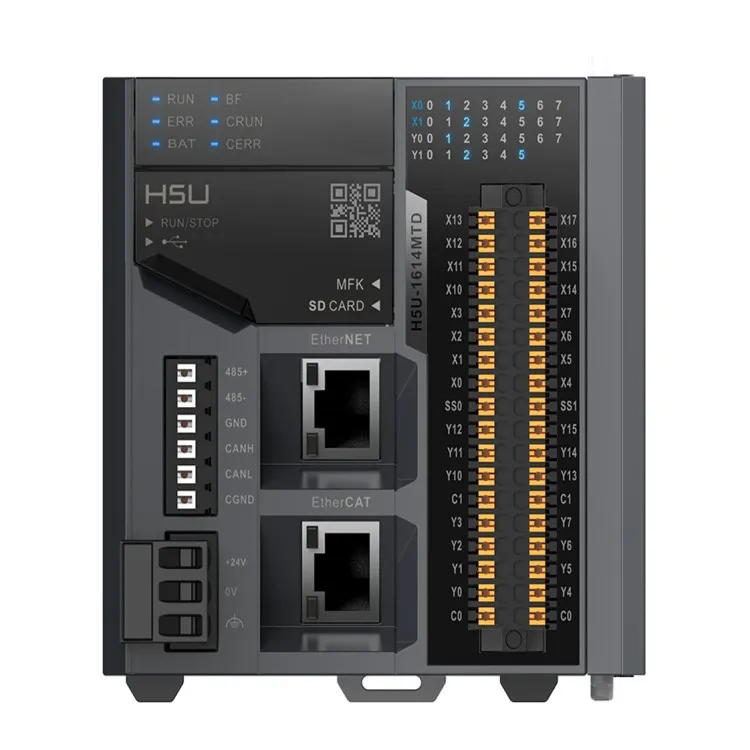
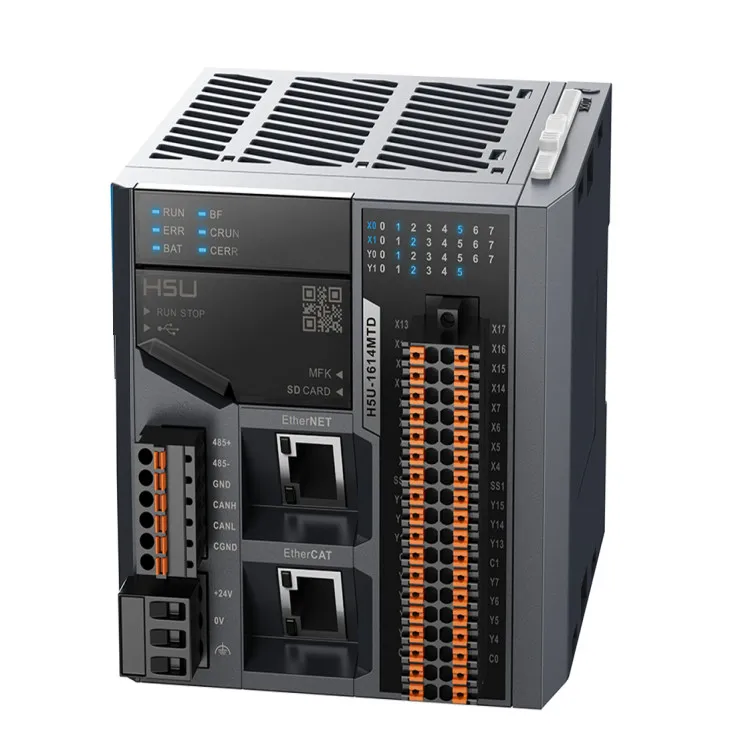
As a leading general PLC supplier, we offer a wide range of PLCs with different memory structures to meet the diverse needs of our customers. Our team of experts can help you select the right PLC based on your specific requirements and provide support in programming and configuration. If you're interested in learning more about our PLC products or have any questions about PLC memory structures, we encourage you to contact us for a procurement discussion. We're committed to providing high - quality PLC solutions that can enhance the efficiency and reliability of your industrial processes.
References
- "Programmable Logic Controllers" by Brian H. C. Bennett
- "Industrial Automation: Fundamentals and Applications" by Michael C. Pecht