
Hey there! As a supplier of Siemens HMI (Human-Machine Interface) displays, I often get asked about the resolution of these nifty devices. So, let's dive right in and explore what the resolution of Siemens HMI displays is all about.
First off, resolution in the context of HMI displays is super important. It refers to the number of distinct pixels that can be displayed in each dimension (width and height) on the screen. A higher resolution means more pixels, which in turn results in a sharper, clearer, and more detailed image. This is crucial for HMIs because they're used in industrial settings where operators need to clearly see data, graphics, and controls.
Siemens offers a wide range of HMI displays, each with different resolutions to meet various application needs. For instance, the Siemens SIMATIC HMI series is known for its high - quality and diverse resolution options. These HMIs are designed to integrate seamlessly with Siemens automation systems, providing operators with an intuitive interface to monitor and control industrial processes.
Let's take a look at some of the common resolutions you'll find in Siemens HMI displays. One of the more basic resolutions is 800 x 480 pixels. This is often found in smaller, entry - level HMIs, like those in the Siemens Basic HMI category. These are great for applications where space is limited or where you don't need ultra - high - definition visuals. For example, in a small machine control panel, an 800 x 480 resolution HMI can display essential information such as temperature, pressure, and status indicators clearly enough for operators to make quick decisions.
Moving up the ladder, you've got resolutions like 1024 x 600 pixels. Displays with this resolution offer a bit more screen real - estate, allowing for more complex graphics and larger amount of data to be shown. This is useful in applications where you need to display multiple data streams simultaneously, such as in a process control room where operators are monitoring different parts of a manufacturing plant.
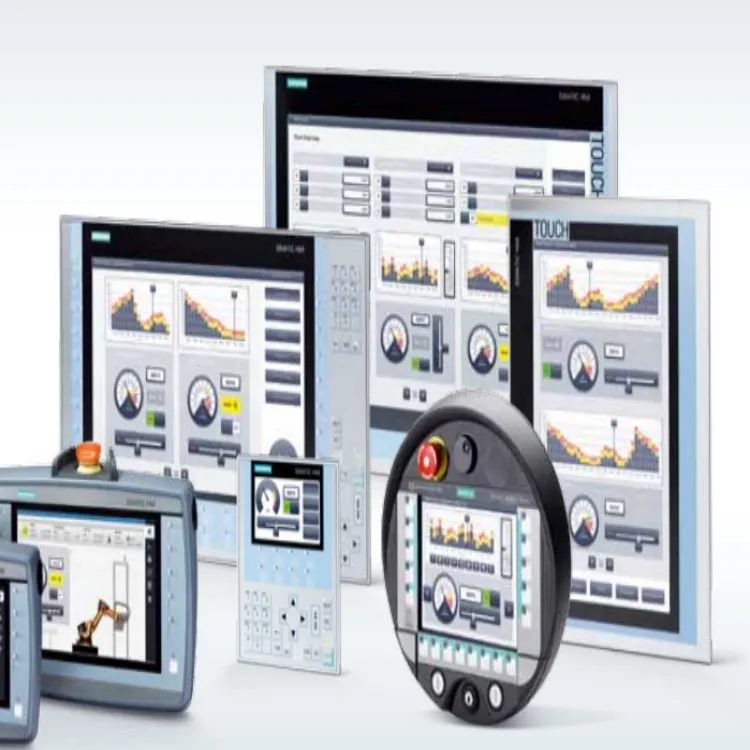
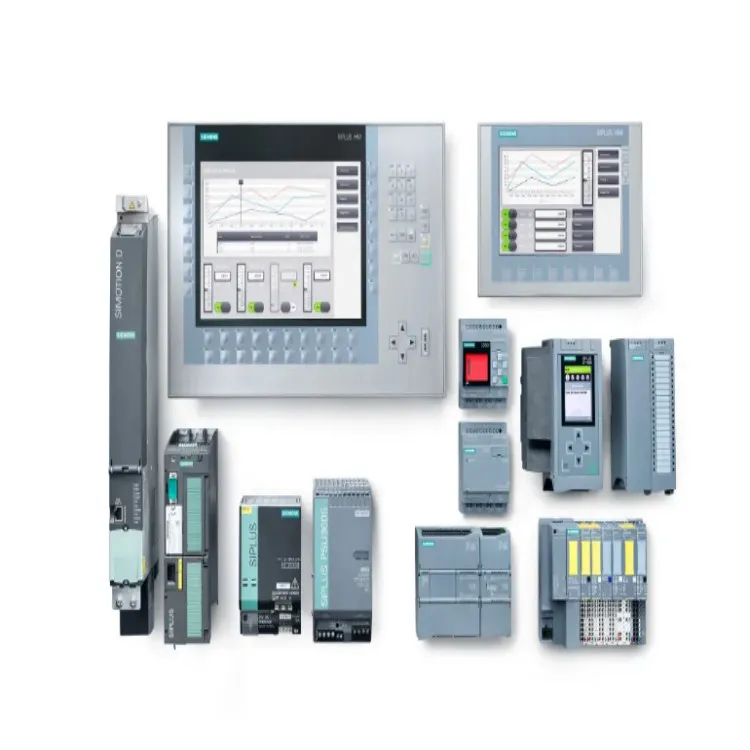
For more demanding applications, Siemens has HMIs with even higher resolutions. For example, some models come with a resolution of 1920 x 1080 pixels, which is Full HD. This high - resolution display is ideal for applications where detailed graphics, large - scale schematics, or video feeds need to be shown. In industries like automotive manufacturing or aerospace, where precision and detailed visualization are key, a Full HD HMI can make a huge difference.
The choice of resolution also depends on the size of the HMI display. A larger display generally benefits from a higher resolution. For example, if you have a 21.5 - inch HMI with a low resolution, the image might appear pixelated and fuzzy. On the other hand, a smaller display, say 7 inches, can still look sharp even with a relatively lower resolution.
Another factor to consider is the viewing distance. In industrial settings, operators may be standing at different distances from the HMI. If they're close to the display, a higher resolution will provide a better viewing experience. But if they're farther away, a slightly lower resolution might still be sufficient as long as the important information is clearly visible.
Siemens also takes into account the durability and reliability of their HMI displays when it comes to resolution. These displays are built to withstand harsh industrial environments, including high temperatures, dust, and vibrations. The high - quality display technology ensures that the resolution remains consistent over time, without any degradation in image quality.
Now, you might be thinking about how the resolution affects the performance of the HMI. Well, a higher - resolution display generally requires more processing power. Siemens HMIs are designed to handle this, with powerful processors and graphics capabilities. However, it's important to make sure that the overall system, including the PLC (Programmable Logic Controller) and other connected devices, can support the high - resolution display. Otherwise, you might experience some lag or slowdowns in the system.
In addition to the standard resolutions, Siemens also offers some displays with custom or non - standard resolutions to meet specific customer requirements. This flexibility is great because it allows us to provide a solution that is tailored to the exact needs of each application.
If you're in the market for a Siemens HMI display, it's important to carefully consider the resolution based on your application requirements. You need to think about the amount of data you'll be displaying, the size of the display, the viewing distance, and the overall system performance.
As a Siemens HMI supplier, I'm here to help you make the right choice. Whether you're a small business looking for a basic HMI for a single machine or a large corporation in need of high - end, high - resolution HMIs for a complex industrial process, we've got you covered. We can provide you with detailed information about each model, its resolution, and how it fits into your specific application.
If you're interested in learning more or are ready to start the procurement process, don't hesitate to reach out. We can have a detailed discussion about your requirements, provide you with a quote, and guide you through the entire purchasing process. Let's work together to find the perfect Siemens HMI display with the right resolution for your business.
References
- Siemens official product documentation
- Industry reports on HMI technology