
In the realm of industrial automation, Programmable Logic Controllers (PLCs) stand as the cornerstone of efficient and reliable control systems. These devices are responsible for managing and regulating various industrial processes, from simple manufacturing operations to complex automated systems. Among the many components that contribute to the functionality of a PLC system, the Controller Area Network (CAN) Bus controllers play a crucial role. As a CAN Bus PLC supplier, I am well - versed in the significance of these controllers and their impact on the overall performance of PLC systems.
Understanding the Basics of CAN Bus and PLCs
Before delving into the role of CAN Bus controllers in a PLC system, it's essential to understand what CAN Bus and PLCs are. The Controller Area Network (CAN) Bus is a robust serial communication protocol developed for automotive applications but has since found widespread use in industrial automation. It is known for its high - speed data transfer capabilities, reliability, and the ability to operate in harsh environments. CAN Bus allows multiple devices to communicate with each other on a shared network, making it an ideal choice for distributed control systems.
On the other hand, Programmable Logic Controllers are digital computers used for automation of industrial processes. PLCs are designed to withstand harsh industrial environments and can be programmed to control machinery, monitor sensors, and perform various logical operations. They are highly flexible and can be easily re - programmed to adapt to changing production requirements.
The Role of CAN Bus Controllers in a PLC System
1. Data Communication
One of the primary roles of CAN Bus controllers in a PLC system is to facilitate data communication between different devices. In an industrial setting, a PLC may need to communicate with sensors, actuators, and other control units. CAN Bus controllers act as an interface between the PLC and these external devices. They are responsible for converting the data from the format used by the PLC to the CAN Bus protocol and vice versa.
For example, a sensor measuring temperature in a manufacturing process needs to send its data to the PLC. The CAN Bus controller will receive the sensor data, format it according to the CAN Bus protocol, and then transmit it over the network to the PLC. Similarly, when the PLC needs to send a control signal to an actuator, the CAN Bus controller will convert the PLC's output into a CAN - compatible format and send it to the actuator.
2. Network Management
CAN Bus controllers also play a vital role in network management within a PLC system. They are responsible for managing the flow of data on the CAN Bus network, ensuring that messages are transmitted and received correctly. This includes tasks such as message arbitration, error handling, and bus monitoring.
Message arbitration is a critical function of the CAN Bus controller. Since multiple devices can transmit messages on the CAN Bus simultaneously, there needs to be a mechanism to determine which message has priority. The CAN Bus controller uses a bit - wise arbitration scheme to resolve conflicts and ensure that the most important messages are transmitted first.
Error handling is another important aspect of network management. The CAN Bus controller continuously monitors the network for errors, such as bit errors, frame errors, or stuff errors. If an error is detected, the controller takes appropriate action, such as re - transmitting the message or notifying the PLC of the error.
3. Integration with Other Systems
In modern industrial automation, PLC systems often need to be integrated with other systems, such as human - machine interfaces (HMIs), supervisory control and data acquisition (SCADA) systems, and enterprise resource planning (ERP) systems. CAN Bus controllers enable this integration by providing a standardized communication interface.
For instance, a HMI may need to display the real - time status of a PLC - controlled process. The CAN Bus controller can be used to establish a communication link between the PLC and the HMI, allowing the HMI to receive data from the PLC and send control commands back to it.
Advantages of Using CAN Bus Controllers in PLC Systems
1. High - Speed Data Transfer
CAN Bus controllers support high - speed data transfer rates, which is essential for real - time control applications in industrial automation. The high - speed data transfer allows the PLC to quickly receive data from sensors and send control signals to actuators, ensuring that the industrial process operates efficiently and accurately.
2. Reliability
CAN Bus is a highly reliable communication protocol, and the CAN Bus controllers are designed to enhance this reliability. They have built - in error detection and correction mechanisms, which help to ensure that the data transmitted over the network is accurate. Additionally, the CAN Bus network is resistant to electromagnetic interference, making it suitable for use in harsh industrial environments.
3. Cost - Effectiveness
Compared to other communication protocols, CAN Bus is relatively cost - effective. The hardware required for CAN Bus communication is less expensive, and the installation and maintenance costs are also lower. This makes CAN Bus controllers an attractive option for PLC systems, especially for small and medium - sized enterprises.
Comparison with Other PLC Types
While CAN Bus PLCs have their advantages, it's also important to compare them with other types of PLCs, such as EtherCAT Bus PLC, 485 Pulse PLC, and Compact Mini PLC.
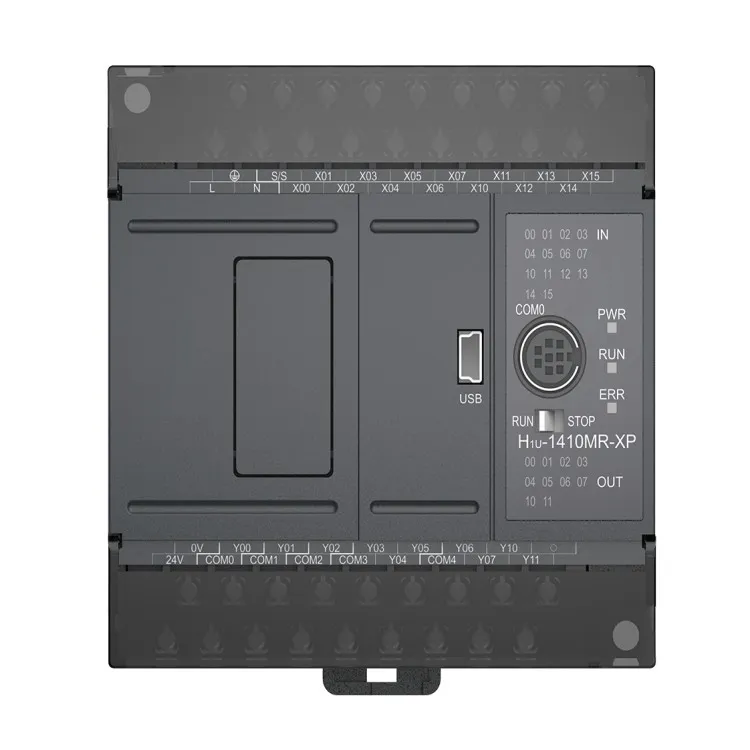
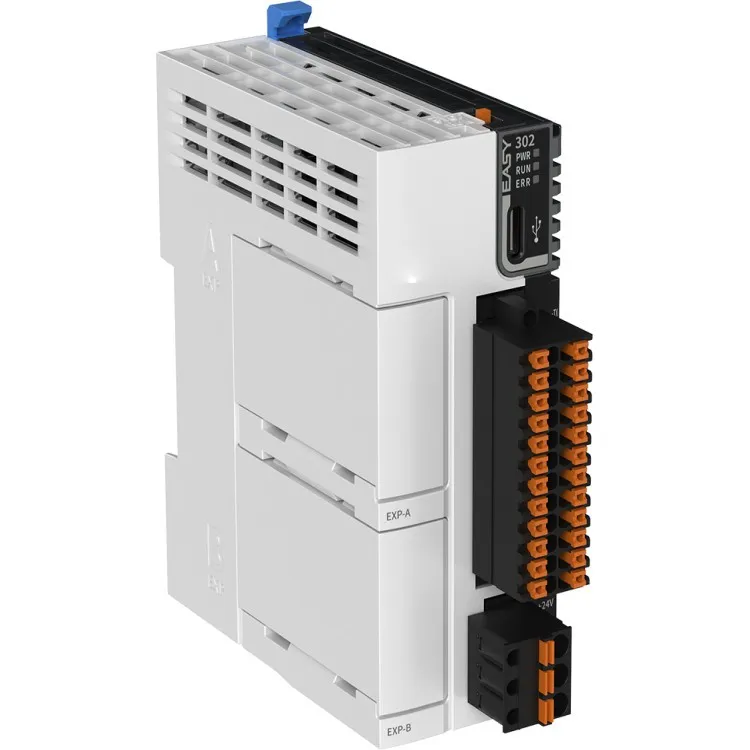
EtherCAT Bus PLCs are known for their extremely high - speed communication capabilities, which make them suitable for applications that require very fast data transfer, such as high - speed motion control systems. However, they may be more expensive and complex to implement compared to CAN Bus PLCs.
485 Pulse PLCs use the RS - 485 communication protocol, which is a popular choice for long - distance communication. They are relatively simple and cost - effective but may have limitations in terms of data transfer speed and network size compared to CAN Bus PLCs.
Compact Mini PLCs are designed for small - scale applications where space and cost are major considerations. They are typically less powerful than CAN Bus PLCs but can be a good option for simple control tasks.
Conclusion
In conclusion, CAN Bus controllers play a vital role in a PLC system. They enable efficient data communication, network management, and integration with other systems. The advantages of using CAN Bus controllers, such as high - speed data transfer, reliability, and cost - effectiveness, make them an attractive option for a wide range of industrial automation applications.
If you are in the market for a reliable and efficient PLC system, considering the use of CAN Bus controllers can be a great decision. Whether you are looking to upgrade an existing system or implement a new one, our company, as a CAN Bus PLC supplier, can provide you with high - quality products and professional solutions. We invite you to contact us for procurement discussions and to learn more about how our CAN Bus PLCs can meet your specific industrial needs.
References
- Dorf, R. C., & Bishop, R. H. (2016). Modern Control Systems. Pearson.
- Kuo, B. C. (2002). Automatic Control Systems. Wiley.
- Tan, K. K., & Lee, T. H. (2004). Advanced PID Control. ISA.