

In the world of optoelectronic sensors, the colour sensor stands out as a remarkable device with a wide range of applications. As a leading supplier of Link Text: Colour Sensor, I often encounter questions regarding the technical aspects of these sensors. One crucial parameter that is frequently discussed is the signal - to - noise ratio (SNR) of a colour sensor. In this blog post, I will delve into what the signal - to - noise ratio of a colour sensor is, why it matters, and how it impacts the performance of the sensor.
Understanding the Basics of Signal - to - Noise Ratio
The signal - to - noise ratio is a fundamental concept in electronics and sensor technology. It is a measure that quantifies the level of a desired signal (the information we want to detect) relative to the level of background noise. In the context of a colour sensor, the signal represents the light information corresponding to the specific colours being detected, while the noise is any unwanted electrical or optical interference that can distort this information.
Mathematically, the SNR is expressed as the ratio of the power of the signal to the power of the noise, often in decibels (dB). The formula for calculating SNR in dB is:
[SNR_{dB}=10\log_{10}\left(\frac{P_{signal}}{P_{noise}}\right)]
where (P_{signal}) is the power of the signal and (P_{noise}) is the power of the noise. A higher SNR value indicates that the signal is stronger relative to the noise, which generally leads to more accurate and reliable sensor readings.
Sources of Signal and Noise in Colour Sensors
Signal Sources
The signal in a colour sensor is primarily generated by the interaction of light with the sensor's photosensitive elements. When light of a specific colour or wavelength falls on the sensor, the photosensitive materials within the sensor absorb the photons and generate an electrical current proportional to the intensity of the light. This electrical current is then processed by the sensor's internal circuitry to produce a digital or analog output representing the detected colour.
For example, in a typical RGB (Red, Green, Blue) colour sensor, there are separate photosensitive elements for each primary colour. Each element responds to the corresponding wavelength range of light, and the combined output of these elements allows the sensor to distinguish between different colours.
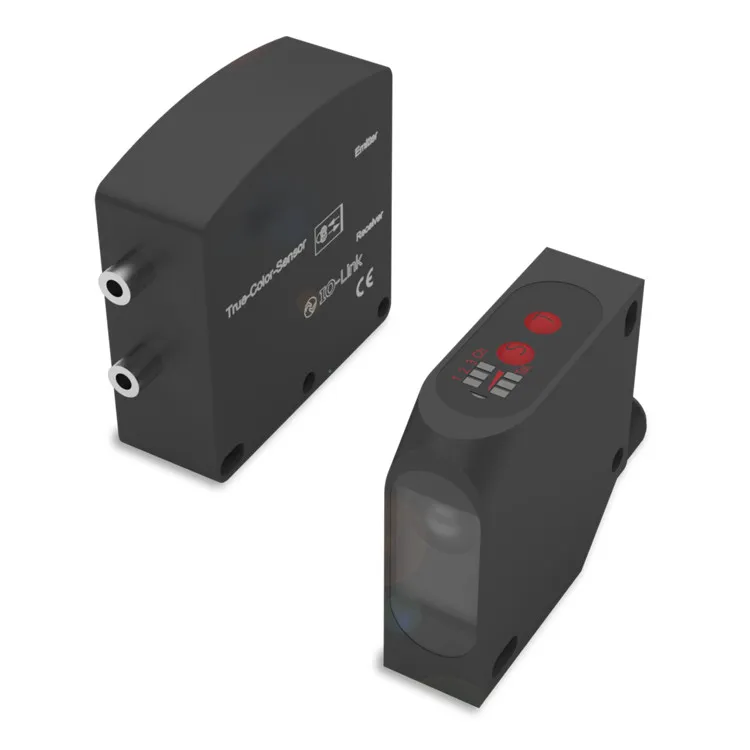

Noise Sources
There are several sources of noise in a colour sensor:
- Thermal Noise: Also known as Johnson - Nyquist noise, thermal noise is generated by the random motion of electrons in the sensor's electrical components due to temperature. Higher temperatures generally result in increased thermal noise.
- Shot Noise: Shot noise is caused by the discrete nature of the photons hitting the photosensitive elements and the discrete nature of the electrons generated in response. It is an inherent noise source in all photodetectors and is proportional to the square root of the signal intensity.
- Flicker Noise: Flicker noise, also called 1/f noise, is a low - frequency noise that is inversely proportional to the frequency. It is often associated with the semiconductor materials used in the sensor and can cause long - term fluctuations in the sensor output.
- External Interference: External factors such as electromagnetic interference (EMI) from nearby electrical devices, ambient light variations, and mechanical vibrations can also introduce noise into the sensor's output.
Importance of Signal - to - Noise Ratio in Colour Sensors
The SNR of a colour sensor is of utmost importance for several reasons:
- Accuracy: A high SNR ensures that the sensor can accurately detect and distinguish between different colours. When the signal is much stronger than the noise, the sensor's output is more likely to represent the true colour of the object being measured. This is crucial in applications where precise colour matching or identification is required, such as in the textile industry for dyeing and colour sorting, or in the automotive industry for paint colour inspection.
- Repeatability: A good SNR also contributes to the repeatability of the sensor's measurements. If the noise level is low, the sensor will produce consistent readings over multiple measurements of the same object. This is essential in quality control applications where consistent results are necessary to ensure product quality.
- Sensitivity: A high SNR allows the sensor to detect weak signals, which means it can operate in low - light conditions or detect subtle colour differences. This is beneficial in applications such as microscopy, where detecting faint colour variations in biological samples is often required.
Measuring the Signal - to - Noise Ratio of a Colour Sensor
Measuring the SNR of a colour sensor typically involves a combination of experimental and analytical techniques. One common method is to use a test setup where a known colour target is illuminated with a stable light source, and the sensor's output is recorded over a period of time. The signal power can be calculated from the average value of the sensor output, while the noise power can be estimated from the standard deviation of the output.
Another approach is to use a spectrum analyzer to measure the power spectral density of the sensor's output. The signal power can be determined from the peak values in the spectrum corresponding to the desired signal frequencies, while the noise power can be estimated from the background noise level in the spectrum.
Impact of SNR on Different Applications
Industrial Automation
In industrial automation, colour sensors are used for a variety of tasks such as object sorting, quality control, and process monitoring. For example, in a food processing plant, a colour sensor can be used to sort fruits based on their ripeness by detecting the colour changes. A high SNR is essential in these applications to ensure accurate sorting and reliable operation. If the SNR is low, the sensor may misclassify objects, leading to production errors and increased waste.
Consumer Electronics
In consumer electronics, colour sensors are commonly used in devices such as smartphones, tablets, and digital cameras. These sensors are used for functions such as automatic white balance adjustment, ambient light sensing, and colour calibration. A good SNR ensures that the device can accurately detect the colour and brightness of the surrounding environment, resulting in better - quality images and a more comfortable user experience.
Medical and Scientific Research
In medical and scientific research, colour sensors are used for applications such as blood analysis, DNA sequencing, and microscopy. In these applications, the ability to detect subtle colour changes is crucial. A high SNR allows researchers to accurately measure the colour - related parameters of biological samples, which can provide valuable information about the health and condition of the samples.
Improving the Signal - to - Noise Ratio of Colour Sensors
As a supplier of Link Text: Colour Sensor, we are constantly working on improving the SNR of our sensors. Some of the techniques we use include:
- Optical Design Optimization: By carefully designing the optical components of the sensor, such as the lenses and filters, we can reduce the amount of stray light and external interference reaching the photosensitive elements. This helps to improve the signal - to - noise ratio by increasing the signal strength and reducing the noise level.
- Low - Noise Circuit Design: Using low - noise electronic components and advanced circuit design techniques, we can minimize the thermal noise and other electrical noise sources in the sensor's internal circuitry. This includes using low - noise amplifiers, proper grounding and shielding, and careful component selection.
- Signal Processing Algorithms: Implementing advanced signal processing algorithms can also help to improve the SNR. These algorithms can filter out the noise from the sensor output while preserving the signal. For example, digital filtering techniques such as moving average filters and Kalman filters can be used to reduce the noise and improve the stability of the sensor readings.
Conclusion
The signal - to - noise ratio is a critical parameter that determines the performance and reliability of a colour sensor. A high SNR ensures accurate colour detection, repeatable measurements, and the ability to operate in challenging environments. As a leading supplier of Link Text: Colour Sensor, we are committed to providing our customers with high - quality sensors with excellent SNR characteristics.
If you are in the market for a colour sensor for your specific application, or if you have any questions about the signal - to - noise ratio or other technical aspects of our sensors, we encourage you to contact us for a detailed discussion. Our team of experts is ready to assist you in selecting the right sensor for your needs and providing you with the best possible solution.
In addition to colour sensors, we also offer a wide range of other optoelectronic sensors, including Link Text: Counter Sensor and Link Text: Contrast Sensor. These sensors are designed to meet the diverse needs of our customers in various industries.
References
- Smith, J. (2018). "Principles of Optoelectronic Sensors". Wiley.
- Jones, A. (2020). "Signal Processing for Sensor Systems". Springer.
- Brown, C. (2019). "Industrial Applications of Colour Sensors". Elsevier.