
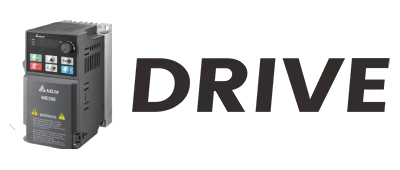
The VFD vector frequency converter has the following significant advantages:
high-precision control
By decomposing the stator current of an AC motor into two mutually perpendicular components-excitation current and torque current-and separately controlling them with high precision, this method achieves accurate regulation of motor speed and torque, making it suitable for applications requiring high control precision, such as servo motors and high-precision machining equipment.
Wide speed regulation range
Open-loop vector control can achieve a speed regulation range of 1:200, while closed-loop vector control approaches servo performance, enabling 100% rated torque output at low speeds. This meets speed regulation requirements for various working conditions and is particularly suitable for applications requiring wide-range speed adjustment, such as lifting equipment and elevators.
Fast dynamic response
It can quickly respond to load variations and speed commands, with short dynamic response times, effectively suppressing low-frequency oscillations to enhance system stability and reliability. It is suitable for high-speed operating and frequently starting/stopping industrial machinery, such as machine tools and textile equipment.
The energy-saving effect is remarkable
The motor speed is automatically adjusted according to the actual load demand, avoiding energy waste during light or no-load conditions. Compared to traditional fixed-speed motor drives, it can significantly reduce power consumption, with particularly notable energy-saving effects in applications such as fans and pumps.
Superior low-frequency performance
It maintains high torque output even at low-frequency operation, addressing the insufficient torque issue of traditional frequency converters at low frequencies. It enables heavy-load starting and smooth low-speed operation, making it suitable for equipment requiring low-speed high torque, such as mine hoists and concrete mixers.
The protection function is well-equipped
It features multiple protection functions such as overcurrent, overvoltage, undervoltage, overheating, overload, and phase loss, enabling real-time monitoring of motor and frequency converter operation status to promptly detect and address faults, ensuring equipment safety and extending service life.
Strong compatibility
Supports various motor types, such as induction motors, permanent magnet synchronous motors, and synchronous reluctance motors, and can adapt to the characteristics of different motors through parameter settings. It also supports multiple communication protocols (e.g., Modbus, CANopen, EtherCAT) for easy integration with PLCs, host computers, and other devices, enabling intelligent control.
Easy to install and maintain
The design adopts a modular approach, featuring a compact structure, small size, light weight, and easy installation. Some frequency converters are equipped with self-tuning functions, enabling automatic recognition of motor parameters and simplifying the debugging process. Additionally, the fault self-diagnosis feature allows for quick identification of fault points, reducing maintenance costs and downtime.
Advantages Of VFD Vector Frequency Converters
Jan 15, 2026
Leave a message