
IO-Link is a revolutionary technology that has been gaining significant traction in the industrial automation sector. As an IO-Link supplier, I've had numerous discussions with customers about the various applications of this technology. One question that frequently arises is, "Can IO-Link be used for actuator control?" In this blog post, I'll delve into this topic, exploring the potential of IO-Link in actuator control and sharing insights based on my experience in the industry.
Understanding IO-Link
Before we dive into actuator control, let's briefly recap what IO-Link is. IO-Link is an open, point-to-point communication standard for sensors and actuators in industrial automation. It provides a simple, cost-effective way to connect devices to a control system, enabling bidirectional communication between the field level and the higher-level automation network. This means that not only can the control system send commands to the devices, but it can also receive data from them, such as status information, diagnostic data, and parameter settings.
One of the key advantages of IO-Link is its ability to provide a standardized interface for a wide range of devices. This simplifies the integration process, reduces wiring complexity, and allows for easy replacement and upgrading of devices. Additionally, IO-Link supports device configuration and parameterization, which can be done remotely via the control system. This feature enables faster commissioning and reduces downtime during maintenance.
Actuator Control Requirements
Actuators are devices that convert energy into mechanical motion. They play a crucial role in industrial automation, controlling processes such as valve opening and closing, motor speed regulation, and robotic arm movement. Effective actuator control requires precise and reliable communication between the control system and the actuator. The control system needs to be able to send commands to the actuator, specifying the desired position, speed, or force, and the actuator needs to be able to provide feedback on its actual state.
In addition to basic control functions, modern actuators often require advanced features such as diagnostic capabilities, parameterization, and remote monitoring. These features help improve system efficiency, reduce maintenance costs, and enhance overall reliability. For example, diagnostic information can be used to detect potential issues before they cause a failure, allowing for proactive maintenance. Parameterization enables the actuator to be customized for specific applications, optimizing its performance.
Can IO-Link Meet Actuator Control Requirements?
The answer is a resounding yes. IO-Link offers several features that make it well-suited for actuator control. First and foremost, its bidirectional communication capability allows for real-time control and feedback. The control system can send commands to the actuator, and the actuator can send back status information, such as position, temperature, and pressure. This enables precise control and ensures that the actuator operates within the desired parameters.
IO-Link also supports device configuration and parameterization. This means that the actuator can be easily configured and optimized for specific applications. For example, the speed, acceleration, and deceleration of a motor actuator can be adjusted remotely via the control system. This flexibility allows for quick adaptation to changing production requirements and reduces the need for manual adjustments on the factory floor.
Another advantage of IO-Link is its diagnostic capabilities. Actuators equipped with IO-Link can provide detailed diagnostic information, such as error codes, operating hours, and fault history. This information can be used to identify potential issues early on, enabling proactive maintenance and reducing downtime. For example, if an actuator is showing signs of overheating, the control system can receive an alert and take appropriate action, such as shutting down the actuator or adjusting its operating parameters.
IO-Link Devices for Actuator Control
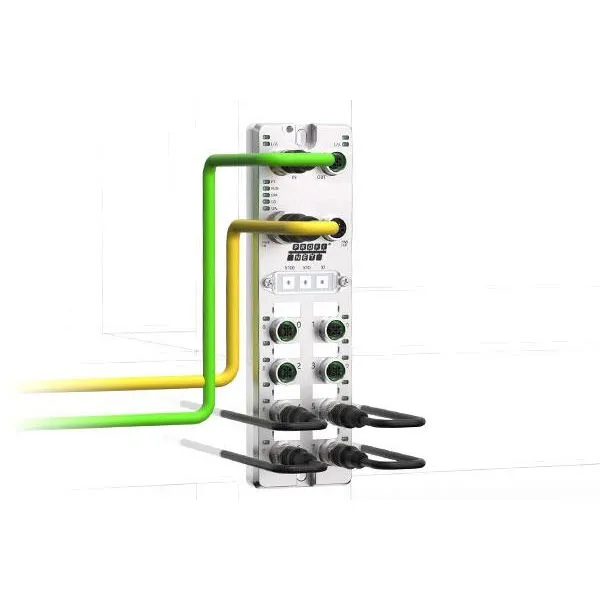
As an IO-Link supplier, we offer a range of devices that are specifically designed for actuator control. One of our key products is the IO-Link Device Module. This module provides a simple and cost-effective way to connect actuators to an IO-Link network. It supports up to four IO-Link devices and can be easily integrated into existing control systems.
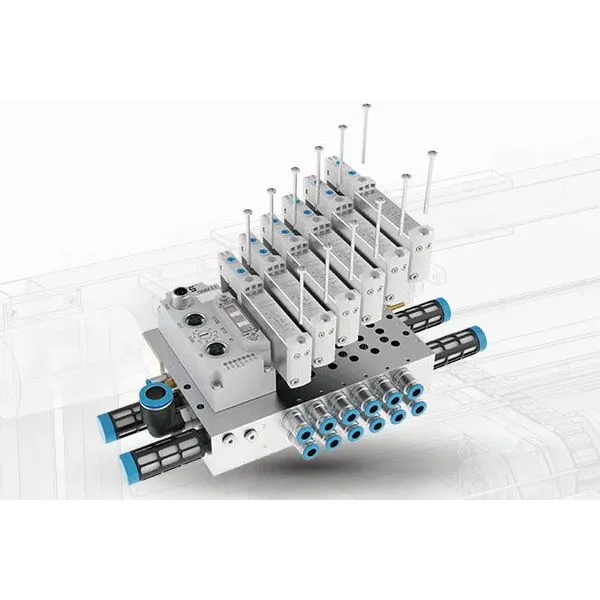
Our Valve Islands are another popular choice for actuator control. These valve islands are designed to control pneumatic actuators, such as cylinders and valves. They offer high-speed switching, precise control, and advanced diagnostic capabilities. With IO-Link connectivity, the valve islands can be easily configured and monitored remotely, allowing for efficient and reliable operation.
For applications that require multi-protocol support, we offer the Multi-protocol Network Module. This module enables IO-Link devices to communicate with different automation networks, such as Ethernet/IP, Profinet, and Modbus TCP. It provides a seamless interface between the IO-Link network and the higher-level control system, ensuring compatibility and interoperability.
Case Studies
To illustrate the effectiveness of IO-Link in actuator control, let's take a look at a few real-world case studies.
Case Study 1: Packaging Machine
A packaging machine manufacturer was looking to improve the performance and reliability of its machines. The existing actuator control system was based on traditional hardwired connections, which made it difficult to configure and maintain. The manufacturer decided to upgrade to an IO-Link-based system using our IO-Link Device Module and Valve Islands.
With the new system, the packaging machines were able to achieve faster and more precise actuator control. The bidirectional communication provided real-time feedback on the actuator status, allowing for better synchronization and reduced cycle times. The diagnostic capabilities of the IO-Link devices also helped identify and resolve issues quickly, reducing downtime and improving overall equipment effectiveness (OEE).
Case Study 2: Automotive Assembly Line
An automotive assembly line was experiencing problems with its robotic arm actuators. The actuators were not operating at the desired speed and accuracy, leading to quality issues and production delays. The company decided to implement an IO-Link-based solution using our Multi-protocol Network Module and IO-Link-enabled actuators.
The new system allowed for easy parameterization of the actuators, enabling them to be optimized for specific tasks. The real-time feedback provided by IO-Link ensured that the robotic arms operated with high precision, improving the quality of the assembled parts. The diagnostic information also helped detect and correct issues early on, reducing maintenance costs and increasing production efficiency.
Conclusion
In conclusion, IO-Link is a powerful technology that can be effectively used for actuator control. Its bidirectional communication, device configuration, and diagnostic capabilities make it well-suited for meeting the requirements of modern actuators. As an IO-Link supplier, we offer a range of products that are specifically designed for actuator control, including the IO-Link Device Module, Valve Islands, and Multi-protocol Network Module.
If you're interested in learning more about how IO-Link can improve your actuator control system, or if you're looking to purchase IO-Link devices for your application, please don't hesitate to contact us. Our team of experts is ready to assist you in finding the right solution for your needs. We look forward to the opportunity to work with you and help you take your industrial automation to the next level.
References
- "IO-Link: The Standard for Sensor and Actuator Communication," IO-Link Consortium
- "Industrial Actuator Handbook," Emerson Automation Solutions
- "Automation Technologies for Actuator Control," Rockwell Automation