
In the dynamic landscape of modern shipbuilding, the quest for innovative technologies that enhance efficiency, reliability, and flexibility is unending. One such technology that has been making waves across various industrial sectors is IO-Link. As an IO-Link supplier deeply involved in the technological evolution, I am often asked: Can IO-Link be used in the shipbuilding industry? In this blog, we will explore the potential of IO-Link in shipbuilding, examining its features, benefits, and real - world applications.
Understanding IO - Link
IO - Link is an open, point - to - point communication standard that allows sensors and actuators to communicate with higher - level control systems. It is a cost - effective solution that bridges the gap between the field level and the control level, providing seamless integration of smart devices into industrial automation networks.
One of the key advantages of IO - Link is its simplicity. It uses a standard three - wire connection, which makes installation and maintenance straightforward. Moreover, it is compatible with existing fieldbus systems, allowing for easy retrofitting in older installations. IO - Link also offers bidirectional communication, enabling not only the transfer of process data but also the configuration and diagnostics of connected devices.
Challenges in the Shipbuilding Industry
The shipbuilding industry faces a unique set of challenges. Ships are complex structures that require a high degree of automation for various functions such as navigation, propulsion, and cargo handling. The harsh marine environment, with its extreme temperatures, high humidity, and exposure to saltwater, demands robust and reliable equipment. Additionally, ships need to be built with flexibility in mind, as they may need to be reconfigured or upgraded over their long service lives.
Cost - effectiveness is also a major concern. Shipbuilding projects are often large - scale and capital - intensive, and any technology that can reduce costs without sacrificing performance is highly desirable.
How IO - Link Addresses Shipbuilding Challenges
1. Robustness and Reliability
IO - Link devices are designed to withstand harsh industrial environments. They are typically housed in rugged enclosures that protect them from dust, water, and mechanical shock. In the shipbuilding context, this means that IO - Link sensors and actuators can operate reliably in the challenging marine environment. For example, pressure sensors using IO - Link can accurately measure the pressure in hydraulic systems on ships, even in the presence of vibrations and temperature fluctuations.
2. Flexibility and Reconfigurability
Ships need to be adaptable to changing requirements. IO - Link allows for easy reconfiguration of connected devices. For instance, if a ship's cargo handling system needs to be modified to accommodate different types of cargo, the IO - Link - enabled sensors and actuators can be quickly reprogrammed without the need for extensive rewiring. This flexibility also simplifies the process of upgrading ships over time, as new IO - Link devices can be easily integrated into the existing system.
3. Cost - Effectiveness
IO - Link reduces installation and maintenance costs. The simple three - wire connection reduces the amount of cabling required, which not only cuts down on material costs but also simplifies the installation process. Moreover, the ability to diagnose and troubleshoot devices remotely via IO - Link reduces the need for on - site maintenance, saving both time and money.
4. Data - Driven Decision Making
IO - Link provides access to valuable diagnostic and process data. This data can be used to optimize the performance of ship systems. For example, by analyzing the data from IO - Link - enabled temperature sensors in the ship's engine room, operators can detect early signs of overheating and take preventive measures, reducing the risk of breakdowns and costly repairs.
IO - Link Components in Shipbuilding
Valve Islands
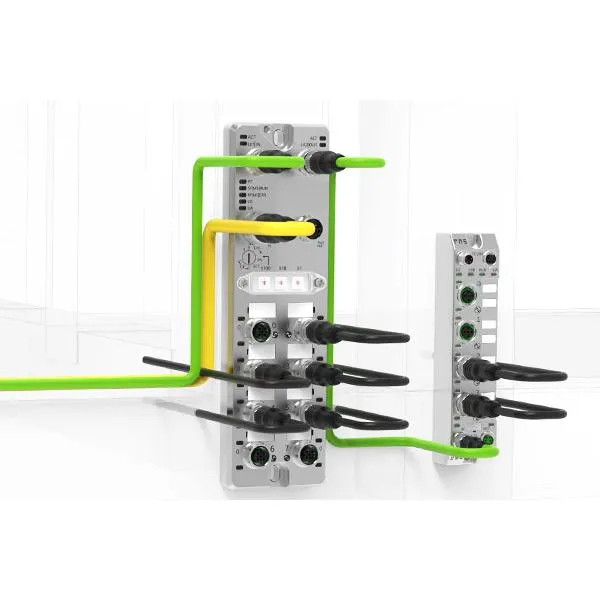
Valve islands are an essential part of many ship systems, such as pneumatic control systems for cargo hatches and steering mechanisms. Valve Islands that support IO - Link offer several advantages. They can be easily configured and monitored, allowing for precise control of pneumatic actuators. The bidirectional communication of IO - Link enables real - time feedback on valve status, which can be used to detect faults and ensure proper operation.
IO - Link Master
The IO - Link Master is the central component that connects IO - Link devices to the higher - level control system. In shipbuilding, the IO - Link Master acts as a gateway, enabling seamless integration of smart sensors and actuators into the ship's automation network. It can handle multiple IO - Link devices simultaneously, providing a centralized point for data collection and device management.
Unmanaged Switch
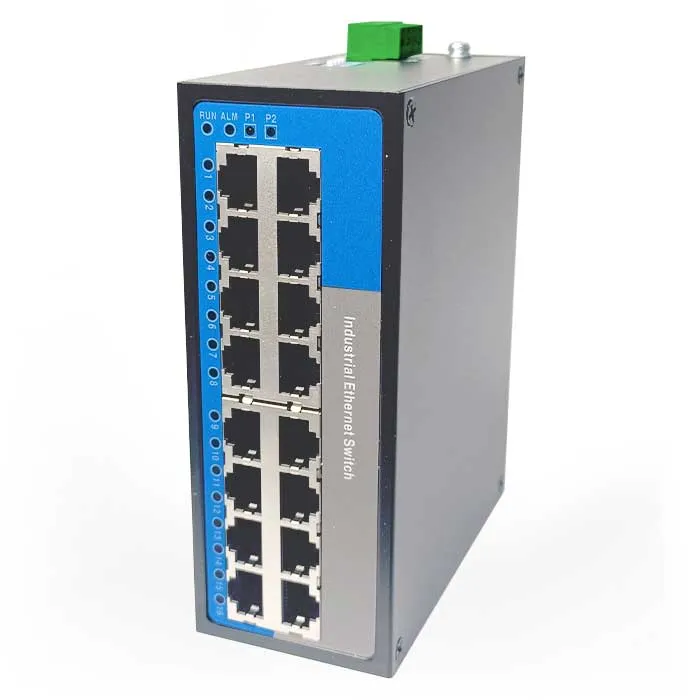
In larger ship automation networks, Unmanaged Switch can be used to expand the network and connect multiple IO - Link Masters. These switches are simple to install and operate, providing a reliable way to distribute data across the ship's automation system.
Real - World Applications in Shipbuilding
Navigation Systems
IO - Link sensors can be used in navigation systems to provide accurate data on the ship's position, speed, and heading. For example, gyroscopic sensors using IO - Link can continuously monitor the ship's orientation, and the data can be transmitted to the ship's control system for precise navigation.
Propulsion Systems
In propulsion systems, IO - Link - enabled sensors can monitor various parameters such as engine temperature, oil pressure, and fuel flow. This data can be used to optimize the engine's performance, improve fuel efficiency, and detect potential problems before they lead to major breakdowns.
Cargo Handling Systems
Cargo handling systems on ships require precise control of actuators. IO - Link - connected valve islands and sensors can ensure that cargo hatches open and close smoothly, and that cranes and other handling equipment operate safely and efficiently.
Conclusion
In conclusion, IO - Link has significant potential in the shipbuilding industry. Its robustness, flexibility, cost - effectiveness, and ability to provide valuable data make it an ideal technology for meeting the unique challenges of shipbuilding. Whether it is for navigation, propulsion, or cargo handling systems, IO - Link can enhance the performance and reliability of ship systems.
As an IO - Link supplier, we are committed to providing high - quality IO - Link products and solutions that meet the specific needs of the shipbuilding industry. If you are involved in shipbuilding and are interested in exploring how IO - Link can benefit your projects, I encourage you to reach out to us for a procurement discussion. We can work together to find the best IO - Link solutions for your shipbuilding requirements.
References
- “Industrial Communication Technologies for Ship Automation.” Shipbuilding Industry Research Journal, Vol. 15, 2022.
- “IO - Link: The Future of Industrial Automation.” Automation Technology Magazine, Vol. 20, 2023.
- “Advances in Sensor and Actuator Technology for Marine Applications.” Marine Engineering Review, Vol. 12, 2021.