
Hey there! As a supplier of Siemens HMI, I often get asked if Siemens HMI can be used for batch processing control. Well, let's dive right into it and explore this topic.
First off, what exactly is batch processing control? Batch processing involves the production of a specific quantity of a product or a set of operations carried out in a sequence. It's commonly used in industries like food and beverage, pharmaceuticals, and chemicals. In batch processing, you have a defined recipe that needs to be followed, with specific steps, timings, and parameters.
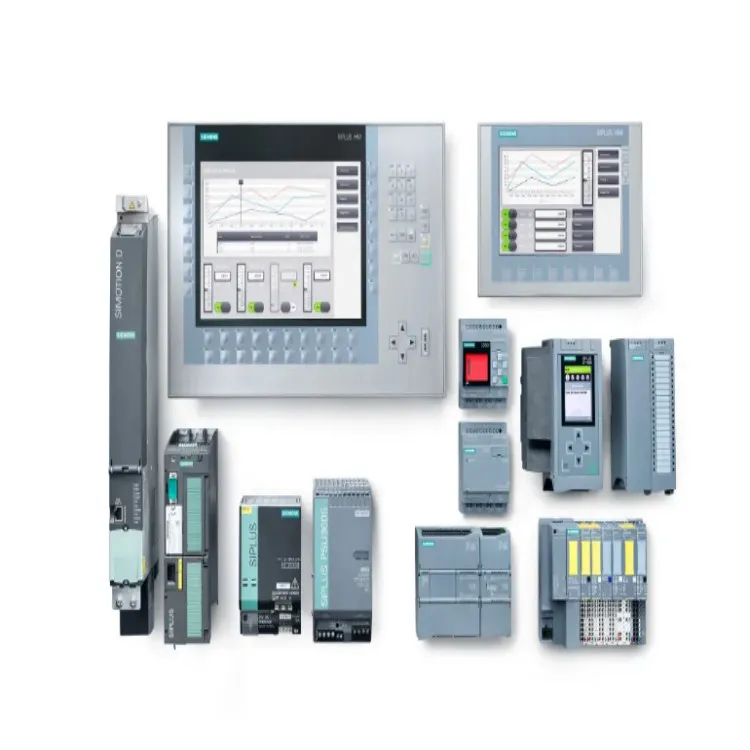
Now, let's talk about Siemens HMI. Siemens offers a range of HMIs, including the Siemens Basic HMI and Siemens SIMATIC HMI. These HMIs are known for their reliability, functionality, and user - friendly interfaces.
One of the key reasons why Siemens HMI is well - suited for batch processing control is its flexibility. With Siemens HMI, you can easily create customized screens that display all the relevant information for each batch process. You can show things like the current step in the process, the setpoints, the actual values, and any alarms or warnings. This allows operators to closely monitor the batch process at every stage.
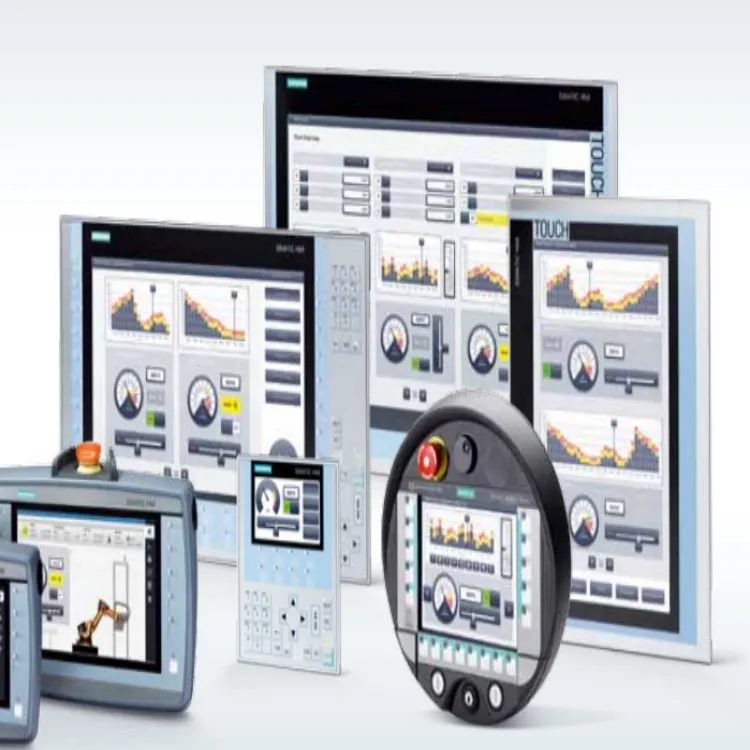
For example, in a pharmaceutical batch process, you might have different steps like mixing, heating, and cooling. The Siemens HMI can display the temperature setpoints for the heating and cooling steps, as well as the actual temperature readings. If the temperature goes out of the specified range, the HMI can trigger an alarm, alerting the operator to take corrective action.
Another great feature is the ability to manage recipes. Siemens HMI allows you to store and manage different batch recipes. You can easily select a recipe for a particular batch, and the HMI will guide the operator through the entire process. This ensures consistency in the production of batches, as each batch will follow the same set of instructions.
Let's say you're in the food and beverage industry, and you produce different flavors of a product. Each flavor has its own unique recipe. With Siemens HMI, you can store all these recipes in the system. When it's time to produce a batch of a specific flavor, the operator simply selects the corresponding recipe on the HMI. The HMI then provides step - by - step instructions, such as the amount of each ingredient to add and the mixing time.
In terms of communication, Siemens HMI has excellent connectivity options. It can communicate with various types of controllers, such as PLCs (Programmable Logic Controllers). This is crucial for batch processing control, as the HMI needs to interact with the control system to gather data and send commands. For instance, if the HMI detects a deviation in a parameter, it can send a signal to the PLC to adjust the process.
The Siemens HMI also supports data logging. This means that all the data related to each batch process, such as the start time, end time, and all the parameter values during the process, can be recorded. This data is extremely valuable for quality control and process optimization. You can analyze the data to identify any trends or issues in the batch process. For example, if you notice that the temperature in a particular step is consistently higher than the setpoint, you can investigate and make adjustments to the process.
But it's not all smooth sailing. Implementing Siemens HMI for batch processing control does come with some challenges. One of the challenges is the initial setup and configuration. You need to have a good understanding of both the batch process and the Siemens HMI system to set it up correctly. However, as a supplier, I'm here to help you with that. We can provide training and support to ensure that you get the most out of your Siemens HMI.
Another potential challenge is the cost. Siemens HMIs are high - quality products, and they do come with a certain price tag. But when you consider the benefits they offer in terms of improving batch process efficiency, quality control, and overall productivity, the investment is well worth it.
There have been many success stories in industries using Siemens HMI for batch processing control. In a chemical plant, for example, implementing a Siemens SIMATIC HMI reduced the batch processing time by 20%. The operators were able to monitor the process more effectively, make timely adjustments, and avoid unnecessary downtime.
In conclusion, Siemens HMI can definitely be used for batch processing control. Its flexibility, recipe management capabilities, communication options, and data logging features make it a powerful tool for industries that rely on batch processing. If you're in an industry that uses batch processing and you're looking for a reliable and efficient way to control your batch processes, Siemens HMI is a great option.
I'm here as your Siemens HMI supplier, ready to assist you with any questions you might have about using Siemens HMI for batch processing control. Whether you need help with the selection of the right HMI, the setup and configuration, or any ongoing support, feel free to get in touch. Let's have a chat and see how we can improve your batch processing operations together.
References
- Siemens HMI product manuals.
- Industry case studies on batch processing control with Siemens HMI.