
As a provider of general PLC systems, I understand the critical importance of scalability in meeting the diverse and evolving needs of our customers. Scalability refers to the ability of a system to handle an increasing amount of work, grow in size, or adapt to new requirements without significant performance degradation. In the context of PLC systems, scalability options are essential for businesses that anticipate growth, changes in production processes, or the need to integrate new technologies. This blog post will explore the various scalability options available for general PLC systems, providing insights into how our products can be tailored to suit different applications and future-proof your operations.
Hardware Scalability
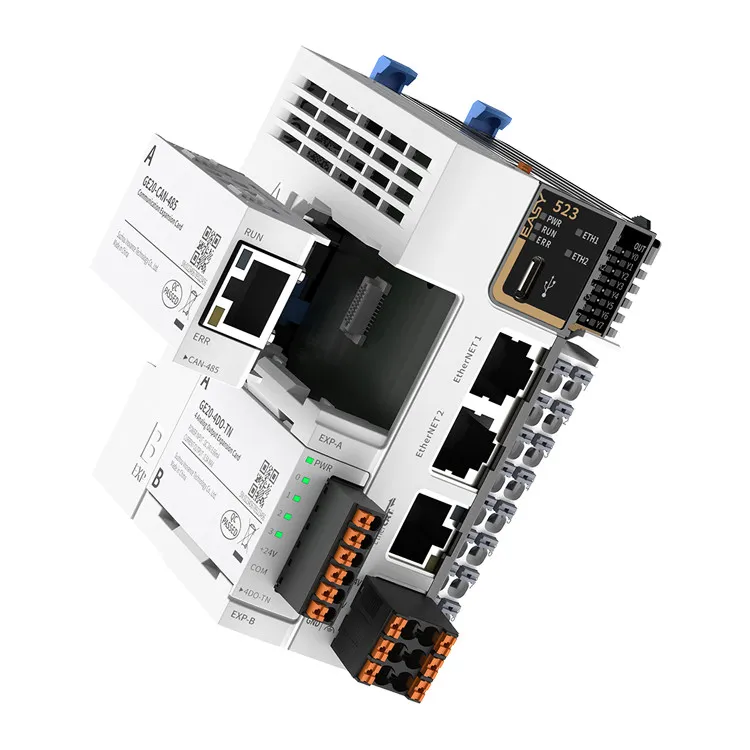
One of the most straightforward ways to scale a PLC system is through hardware expansion. This can involve adding more input/output (I/O) modules, processors, or communication interfaces to the existing system. Our range of Compact Mini PLC is designed with modularity in mind, allowing for easy and cost-effective expansion. These compact yet powerful PLCs can be equipped with additional I/O modules to accommodate more sensors, actuators, and other devices as your production requirements increase.
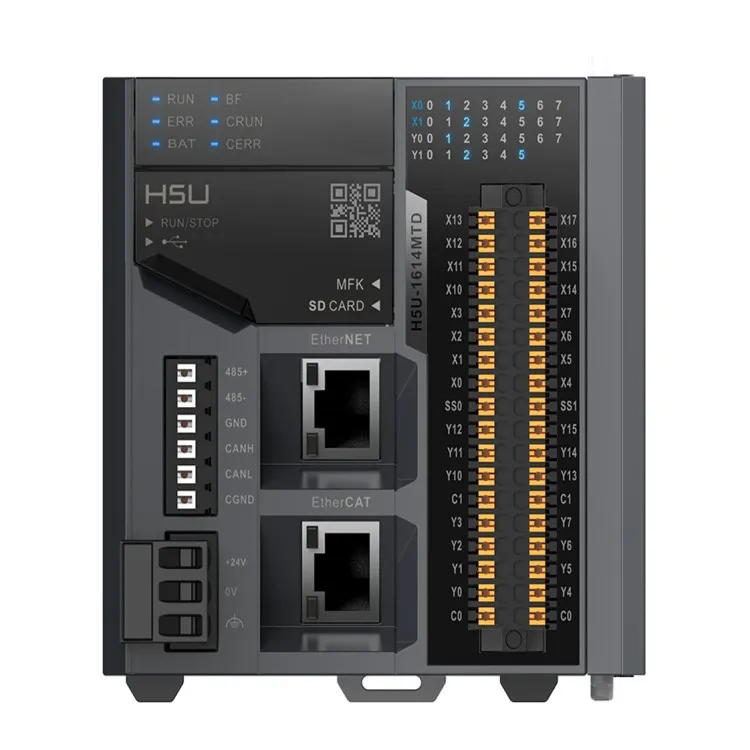
For larger-scale applications, our EtherCAT Bus PLC offers high-speed communication and the ability to connect multiple slaves, enabling seamless integration of a large number of I/O points. EtherCAT is a high-performance Ethernet-based fieldbus system that provides real-time communication, making it ideal for applications that require fast and precise control. With its distributed clock system and high bandwidth, the EtherCAT Bus PLC can support complex automation tasks and handle large amounts of data without sacrificing performance.
Another option for hardware scalability is the use of CAN Bus PLC. The Controller Area Network (CAN) bus is a robust and reliable communication protocol commonly used in automotive and industrial applications. Our CAN Bus PLCs are designed to communicate with other CAN devices, allowing for easy integration into existing CAN networks. This makes it possible to expand your PLC system by adding more CAN-compatible devices, such as sensors, actuators, and other control units.
Software Scalability
In addition to hardware expansion, software scalability is also crucial for PLC systems. Our PLC programming software provides a flexible and intuitive environment for developing and modifying control programs. With features such as ladder logic, function block diagrams, and structured text programming, our software allows you to create complex control algorithms that can be easily adapted to changing requirements.
One of the key advantages of our software is its ability to support multi-tasking and multi-threading. This means that you can run multiple control programs simultaneously, each with its own priority and execution cycle. This is particularly useful for applications that require complex control strategies, such as motion control, process control, and robotics. By using multi-tasking and multi-threading, you can optimize the performance of your PLC system and ensure that critical tasks are executed in a timely manner.
Another important aspect of software scalability is the ability to integrate with other software systems. Our PLC programming software supports a wide range of communication protocols, including Modbus, Ethernet/IP, and Profibus. This allows you to connect your PLC system to other devices, such as human-machine interfaces (HMIs), supervisory control and data acquisition (SCADA) systems, and enterprise resource planning (ERP) systems. By integrating your PLC system with other software systems, you can achieve greater visibility and control over your production processes, as well as improve efficiency and productivity.
System Architecture Scalability
The architecture of your PLC system also plays a crucial role in its scalability. A well-designed system architecture can make it easier to add new components, expand the system, and integrate with other systems. Our PLC systems are designed with a modular and hierarchical architecture, which allows for easy expansion and integration.
At the lowest level of the architecture, we have the I/O modules, which are responsible for connecting the PLC to the physical world. These modules can be easily added or removed as needed, depending on the number of sensors and actuators in your application. Above the I/O modules, we have the PLC processors, which are responsible for executing the control programs. Our PLC processors are available in different sizes and performance levels, allowing you to choose the one that best suits your application requirements.
At the top level of the architecture, we have the communication interfaces, which are responsible for connecting the PLC system to other devices and systems. Our communication interfaces support a wide range of communication protocols, allowing you to integrate your PLC system with other devices, such as HMIs, SCADA systems, and ERP systems. By using a modular and hierarchical architecture, we can ensure that our PLC systems are scalable, flexible, and easy to maintain.
Cloud-Based Scalability
In recent years, cloud computing has emerged as a powerful tool for scaling PLC systems. By using cloud-based services, you can store and analyze large amounts of data, as well as access your PLC system remotely from anywhere in the world. Our cloud-based platform provides a secure and reliable way to connect your PLC system to the cloud, allowing you to monitor and control your production processes in real-time.
One of the key advantages of cloud-based scalability is the ability to scale your storage and computing resources on-demand. With cloud-based services, you can easily increase or decrease your storage and computing capacity as needed, depending on the amount of data you need to store and analyze. This makes it possible to handle large amounts of data without having to invest in expensive hardware and infrastructure.
Another important aspect of cloud-based scalability is the ability to access your PLC system remotely. With our cloud-based platform, you can access your PLC system from anywhere in the world, using a web browser or a mobile device. This makes it possible to monitor and control your production processes in real-time, even when you are away from the factory. By using cloud-based services, you can improve the efficiency and productivity of your operations, as well as reduce costs and downtime.
Conclusion
In conclusion, scalability is a critical factor in the success of any PLC system. By choosing a scalable PLC system, you can ensure that your system can adapt to changing requirements, grow with your business, and integrate with other systems. Our range of general PLC systems offers a variety of scalability options, including hardware expansion, software scalability, system architecture scalability, and cloud-based scalability. Whether you are looking to expand your existing system, integrate new technologies, or future-proof your operations, we have the solutions to meet your needs.
If you are interested in learning more about our general PLC systems and their scalability options, please contact us to schedule a consultation. Our team of experts will be happy to discuss your specific requirements and help you choose the solution that best suits your application. We look forward to working with you to achieve your automation goals.
References
- "Industrial Automation: Principles and Applications" by Thomas H. Lee
- "PLC Programming: A Practical Approach" by John W. Palm III
- "Cloud Computing for Industrial Automation" by Mark A. Geier