
Hey there! As a supplier of stepper systems, I often get asked about open-loop control in stepper systems. So, I thought I'd break it down in this blog post.
First off, let's understand what a stepper system is. A stepper system mainly consists of a stepper motor and a driver. The stepper motor is a brushless DC electric motor that divides a full rotation into a number of equal steps. There are different types of stepper motors, like the 2 Phase Stepper Motor and the 3 Phase Stepper Motor. The driver, on the other hand, is responsible for providing the necessary electrical signals to the motor to make it move in those steps.
Now, let's dive into open-loop control. In an open-loop control system of a stepper system, there's no feedback mechanism. That means the system doesn't check if the motor actually moved to the desired position. It just sends a series of pulses to the driver, and the driver then energizes the motor coils accordingly to make the motor step.
One of the biggest advantages of open-loop control is its simplicity. Since there's no need for sensors to provide feedback, the system is less complex and cheaper to set up. For small-scale applications where precision isn't super critical, open-loop control is a great choice. For example, in some simple 3D printers, open-loop stepper systems are used to control the movement of the print head. The system sends a certain number of pulses to move the print head to a specific position, and it assumes the head has reached that position without double-checking.
Another benefit is the fast response time. Without the need to wait for feedback and process it, the system can quickly send out pulses to make the motor move. This makes open-loop control suitable for applications where rapid movement is required, like in some automated conveyor systems.
However, open-loop control also has its limitations. The most obvious one is the lack of accuracy. Since there's no feedback, if the motor misses a step due to factors like mechanical load, friction, or electrical interference, the system won't know. Over time, these missed steps can add up, and the motor might end up in a completely different position than intended.
Let's say you're using an open-loop stepper system to control the rotation of a camera in a surveillance system. If there's a sudden increase in the load on the motor due to some external force, the motor might miss a few steps. Without feedback, the system will keep thinking the camera is in the right position, but in reality, it's not, which could lead to poor surveillance coverage.
Also, open-loop systems have limited torque capabilities. As the speed of the motor increases, the torque it can produce decreases. This means that in high-speed or high-load applications, open-loop control might not be sufficient.
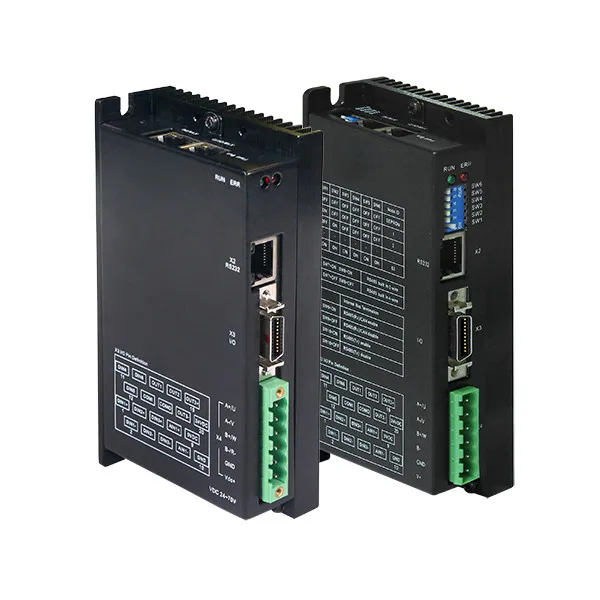
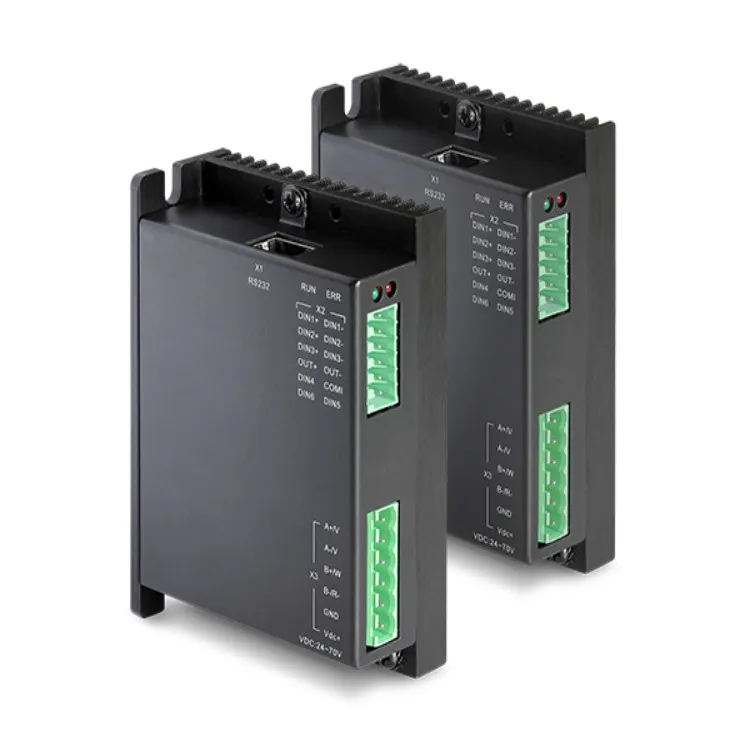
Now, let's talk about how our stepper systems with open-loop control can benefit you. We offer a wide range of Field Bus Stepper Driver that are designed to work seamlessly with our stepper motors in open-loop control. Our drivers are highly efficient and can provide stable electrical signals to ensure smooth operation of the motors.
Our 2-phase and 3-phase stepper motors are built with high-quality materials and advanced manufacturing techniques. They offer high torque, low noise, and long service life. Whether you're working on a small DIY project or a large industrial application, our open-loop stepper systems can meet your needs.
If you're looking for a cost-effective and simple solution for your motion control needs, our open-loop stepper systems are definitely worth considering. We have a team of experts who can help you choose the right system for your specific application.
If you're interested in learning more about our open-loop stepper systems or want to discuss a potential project, don't hesitate to reach out. We're always happy to have a chat and see how we can help you with your stepper system requirements.
References
- "Stepper Motor Control Handbook" by some well - known author
- Industry reports on motion control systems