
Hey there! As a Siemens PLC supplier, I've gotten tons of questions about the organization block in Siemens PLC. So, I thought I'd break it down for you in this blog post.
Let's start with the basics. An organization block, often referred to as an OB in Siemens PLC lingo, is a special type of program block. It's like the conductor of an orchestra, coordinating when and how other program blocks are executed. OBs are the entry points for the program execution in a Siemens PLC system. They determine the sequence and timing of various tasks within the PLC.
There are different types of OBs, each with its own specific function. For example, we have the cyclic OBs. These are executed at regular intervals. Think of them as the heartbeat of your PLC program. They ensure that certain tasks are carried out repeatedly at a set time. For instance, if you have a process that needs to be monitored every few milliseconds, a cyclic OB can be set up to do just that.
Then, there are the event - driven OBs. These are triggered by specific events. An event could be an input signal change, a communication error, or a time - of - day event. When the defined event occurs, the corresponding event - driven OB is executed. It's like having a little alarm that goes off when something specific happens, and then the PLC jumps into action and runs the appropriate program block.
Another important type is the startup OB. As the name suggests, it's executed when the PLC starts up. This is where you can put code to initialize variables, set up communication interfaces, or perform other tasks that need to be done right at the beginning.
Now, let's talk about how these OBs fit into different Siemens PLC models. Take the Siemens PLC S7 1500 for example. It has a wide range of OBs available, which gives you a lot of flexibility in programming. You can use different OBs to handle complex automation tasks, from simple logic control to advanced motion control. The S7 1500 is a high - performance PLC, and its OB structure is designed to support large - scale industrial applications.
The Siemens PLC S7 200 is a more compact and cost - effective option. It also has its own set of OBs, although the number and functionality might be a bit more limited compared to the S7 1500. But don't let that fool you. For small - scale automation projects, the S7 200's OBs are more than enough to get the job done. You can still use cyclic and event - driven OBs to create efficient control programs.
The Siemens PLC S7 1200 is kind of in the middle. It offers a good balance between performance and cost. Its OBs are well - designed to handle medium - sized automation tasks. You can use them for tasks like process control, machine monitoring, and basic robotics applications.
When it comes to programming with OBs, it's important to understand the priority levels. Different OBs have different priority levels, which determine the order in which they are executed if multiple OBs are triggered at the same time. Higher - priority OBs will be executed first. This is crucial for ensuring that critical tasks are always handled promptly.
For example, if you have a safety - related event - driven OB and a normal data - logging OB triggered simultaneously, the safety - related OB should have a higher priority so that it can be executed immediately to prevent any potential hazards.
As a Siemens PLC supplier, I've seen firsthand how important it is to have a good understanding of OBs. A well - designed OB structure can make your automation system more reliable, efficient, and easier to maintain. If you're new to programming Siemens PLCs, taking the time to learn about OBs is definitely worth it.
Let's say you're working on a project where you need to control a conveyor belt system. You could use a cyclic OB to continuously monitor the speed of the conveyor belt. If the speed goes out of the acceptable range, an event - driven OB could be triggered to stop the conveyor belt and send an alarm signal. And during startup, the startup OB could be used to initialize the motor control parameters.
In addition to the basic types of OBs, Siemens also offers some specialized OBs for specific applications. For example, there are OBs for handling communication protocols like Profibus or Ethernet/IP. These specialized OBs make it easier to integrate your PLC with other devices in the industrial network.
If you're having trouble with your OB programming, don't worry. There are plenty of resources available. Siemens provides detailed documentation and manuals that explain the functions and programming of each OB in great detail. You can also find online forums where other programmers share their experiences and solutions to common problems.
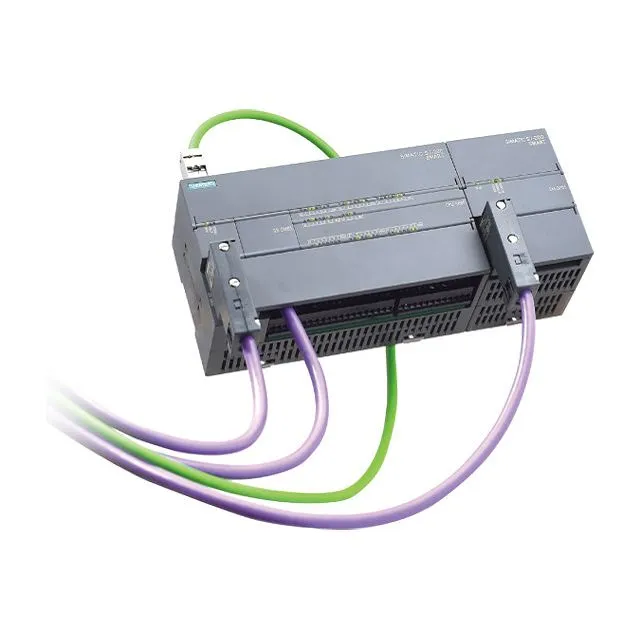
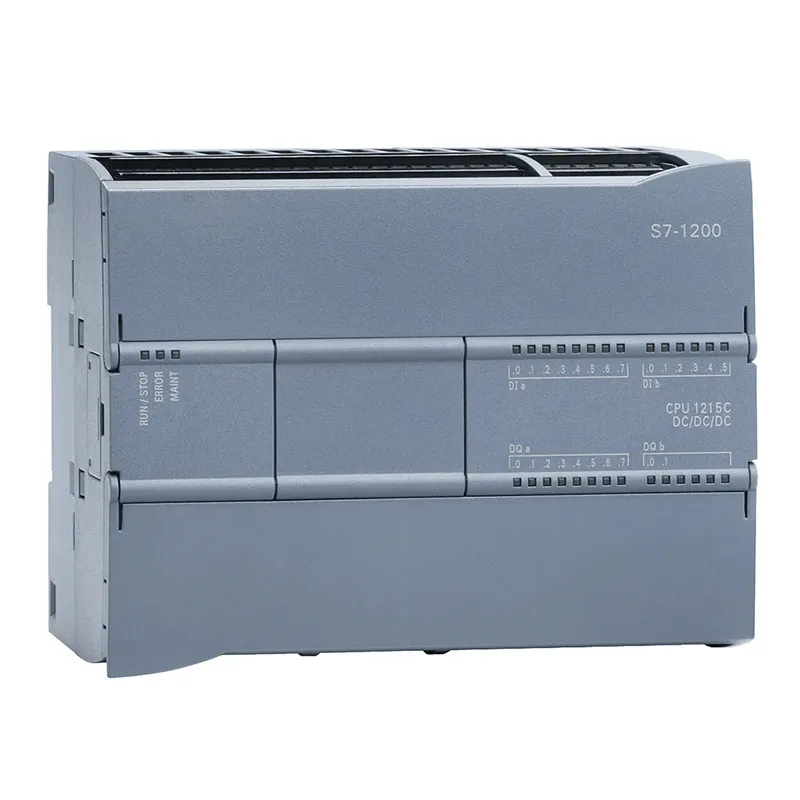
In conclusion, the organization block in Siemens PLC is a fundamental concept that plays a crucial role in the programming and operation of Siemens PLC systems. Whether you're using the Siemens PLC S7 1500, Siemens PLC S7 200, or Siemens PLC S7 1200, understanding OBs is key to creating effective automation solutions.
If you're in the market for Siemens PLCs or need help with your existing PLC system, I'd love to have a chat with you. Whether you're a small business looking for a simple control solution or a large corporation in need of a complex automation system, I can provide you with the right products and support. So, don't hesitate to reach out for a procurement discussion.
References
- Siemens PLC Programming Manuals
- Industrial Automation Forums