
When it comes to industrial automation and precise motion control, a DC servo driver plays a pivotal role. As a DC Servo Driver supplier, I understand the challenges that customers face in choosing the right driver for their specific applications. In this blog, I will share some key factors to consider when selecting a suitable DC servo driver.
1. Application Requirements
The first step in choosing a DC servo driver is to clearly define your application requirements. Different applications have different demands in terms of torque, speed, accuracy, and motion profile.
- Torque Requirements: The torque required by your application will determine the power rating of the DC servo driver. For applications that require high torque, such as heavy - duty machinery or large - scale robotic arms, you need a driver with a higher power output. On the other hand, for light - duty applications like small - scale automation equipment or precision positioning systems, a lower - power driver may be sufficient.
- Speed Requirements: Consider the maximum and minimum speeds required for your application. Some applications, such as high - speed pick - and - place machines, need drivers that can support high rotational speeds. Others, like slow - moving calibration systems, may require precise control at very low speeds.
- Accuracy Requirements: If your application demands high precision, such as in semiconductor manufacturing or medical equipment, you need a DC servo driver with high - resolution feedback and advanced control algorithms. This will ensure that the motor can achieve accurate positioning and speed control.
2. Compatibility with the Motor
The DC servo driver must be compatible with the DC servo motor you are using. Compatibility issues can lead to poor performance, increased energy consumption, and even damage to the motor or the driver.
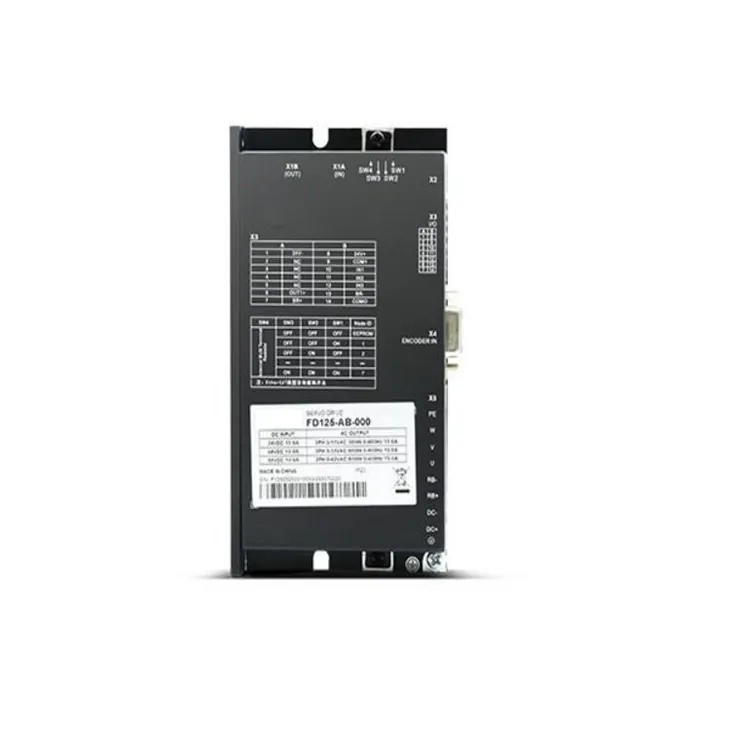
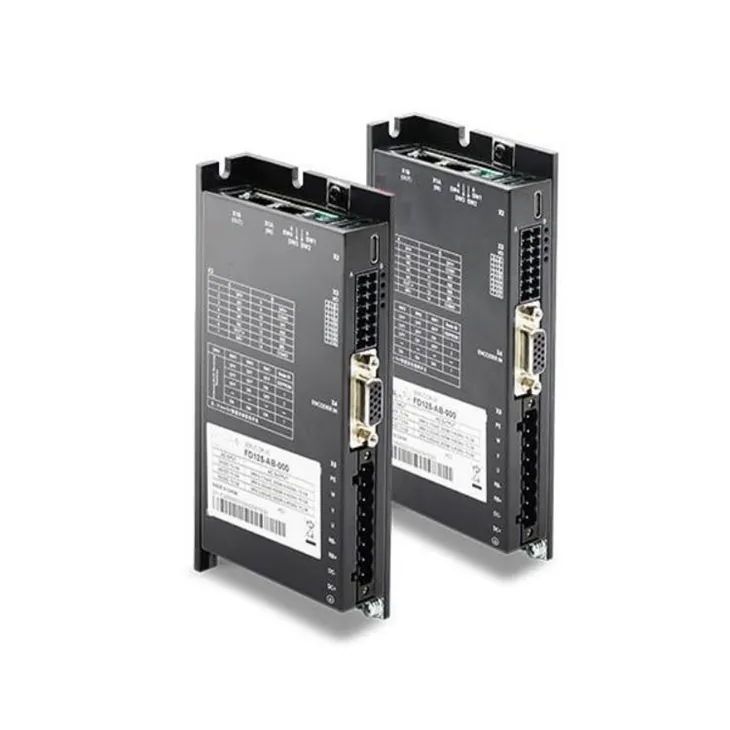
- Voltage and Current Ratings: The voltage and current ratings of the driver should match those of the motor. Using a driver with a lower voltage or current rating than the motor requires can result in insufficient power and reduced performance. Conversely, using a driver with a much higher rating can be wasteful and may pose safety risks.
- Motor Type: Different types of DC servo motors, such as brushed and brushless DC motors, have different operating characteristics. Make sure the driver you choose is designed to work with the specific type of motor in your application. For example, brushless DC motors require a driver that can provide the appropriate commutation signals, while brushed DC motors have simpler control requirements.
3. Control Modes
DC servo drivers offer various control modes, each suitable for different applications. Understanding these control modes and choosing the one that best fits your needs is crucial.
- Position Control: Position control mode is used when precise positioning of the motor shaft is required. In this mode, the driver receives a position command and adjusts the motor's speed and torque to achieve the desired position. Applications such as CNC machines, 3D printers, and robotic manipulators often use position control.
- Speed Control: Speed control mode is used when maintaining a constant speed is the primary requirement. The driver adjusts the motor's torque to keep the speed stable, regardless of changes in load or other external factors. Applications like conveyor belts, fans, and pumps typically use speed control.
- Torque Control: Torque control mode is used when precise control of the motor's torque is necessary. This mode is often used in applications where the load varies, such as in tension control systems or robotic grippers.
4. Feedback Devices
Feedback devices are essential for accurate control of DC servo motors. They provide information about the motor's position, speed, and torque, allowing the driver to make real - time adjustments.
- Encoders: Encoders are the most commonly used feedback devices in DC servo systems. They can be either incremental or absolute encoders. Incremental encoders provide information about the relative position and speed of the motor shaft, while absolute encoders provide the absolute position of the shaft. Absolute encoders are more suitable for applications that require accurate positioning after power - on, such as in machine tools and automated storage systems.
- Hall Sensors: Hall sensors are often used in brushless DC motors to provide commutation information. They can also be used to provide basic speed and position feedback. Hall sensors are relatively inexpensive and simple to install, but they have lower resolution compared to encoders.
5. Protection Features
A good DC servo driver should have a variety of protection features to ensure the safety and reliability of the system.
- Over - current Protection: Over - current protection prevents the driver and the motor from being damaged by excessive current. When the current exceeds a certain limit, the driver will automatically reduce the output or shut down to protect the components.
- Over - voltage and Under - voltage Protection: Over - voltage and under - voltage protection safeguard the driver from damage caused by abnormal power supply voltages. If the input voltage is too high or too low, the driver will take appropriate measures to protect itself.
- Over - temperature Protection: Over - temperature protection monitors the temperature of the driver and the motor. If the temperature exceeds a safe limit, the driver will reduce the output power or shut down to prevent overheating and potential damage.
6. Communication Interfaces
Modern DC servo drivers often come with various communication interfaces, which allow them to be integrated into larger control systems.
- Serial Communication: Serial communication interfaces, such as RS - 232 and RS - 485, are commonly used for simple data transfer between the driver and a controller. They are suitable for applications where the communication distance is relatively short and the data transfer rate is not very high.
- Fieldbus Communication: Fieldbus communication interfaces, such as CANopen, Modbus, and Profibus, are used for more complex control systems. They allow multiple drivers and other devices to be connected in a network, enabling centralized control and monitoring.
- Ethernet Communication: Ethernet communication interfaces provide high - speed data transfer and are suitable for applications that require real - time control and remote monitoring. They are becoming increasingly popular in industrial automation systems.
7. Size and Mounting
The physical size and mounting options of the DC servo driver are also important considerations, especially in applications where space is limited.
- Size: Choose a driver that has a compact size if your application has limited space. Mini DC Servo Drivers are available for applications where size is a critical factor. You can find more information about Mini DC Servo Driver on our website.
- Mounting Options: Consider the mounting options available for the driver. Some drivers can be mounted on a DIN rail, which is convenient for installation in control cabinets. Others may require panel - mounting or chassis - mounting. Make sure the driver can be easily installed in your system.
8. Cost
Cost is always a factor when choosing a DC servo driver. However, it is important to consider the overall cost - effectiveness rather than just the initial purchase price.
- Initial Purchase Price: Compare the prices of different drivers, but also consider the features and performance they offer. A more expensive driver may have advanced features that can improve the performance and reliability of your application, resulting in long - term cost savings.
- Operating Cost: Consider the energy consumption of the driver. A more energy - efficient driver can reduce your operating costs over time. Also, factor in the cost of maintenance and spare parts.
As a DC Servo Driver supplier, we offer a wide range of DC Servo Driver products that are designed to meet the diverse needs of our customers. We also provide Low - voltage Servo Motor options for applications that require lower power consumption. If you are looking for a suitable DC servo driver for your application, we are here to help. Our team of experts can provide you with professional advice and support to ensure that you make the right choice. Please feel free to contact us for more information and to start a procurement negotiation.
References
- "Servo Motors and Drives: Theory, Design, and Application" by Paul C. Krause, Oleg Wasynczuk, and Scott D. Sudhoff.
- "Motion Control Handbook" by Ned Mohan.