

In the dynamic landscape of the Internet of Things (IoT), IoT gateways stand as pivotal components, bridging the gap between various devices and the cloud or other higher - level systems. As an established IoT Gateway supplier, I am thrilled to delve into the main components that make up an IoT gateway, shedding light on their functions and significance.
Hardware Components
Central Processing Unit (CPU)
The CPU is the brain of the IoT gateway. It processes data received from connected devices, executes control commands, and manages the overall operation of the gateway. A high - performance CPU is essential, especially in scenarios where a large number of devices are connected, and real - time data processing is required. For instance, in a smart factory environment, the gateway needs to handle data from numerous sensors and actuators simultaneously. CPUs with multi - core capabilities can significantly enhance the processing speed and efficiency of the gateway. Intel Atom processors are often used in IoT gateways due to their low power consumption and decent processing power, making them suitable for long - term operation in various industrial settings.
Memory
Memory in an IoT gateway is crucial for storing data and running applications. There are two main types of memory: Random Access Memory (RAM) and Read - Only Memory (ROM). RAM is used for temporarily storing data that the CPU is currently processing. A larger RAM capacity allows the gateway to handle more concurrent tasks and process larger volumes of data. On the other hand, ROM stores the firmware and essential system programs of the gateway. It ensures that the gateway can boot up and function properly even after a power outage. Flash memory is commonly used as ROM in IoT gateways because of its non - volatility and relatively high storage capacity.
Network Interface Cards (NICs)
NICs enable the IoT gateway to connect to different types of networks. Ethernet NICs are widely used for wired network connections, providing high - speed and stable data transmission. They are suitable for industrial environments where reliability is of utmost importance. Wireless NICs, such as Wi - Fi, Bluetooth, and ZigBee modules, offer more flexibility in device connection. For example, in a smart home IoT system, Wi - Fi and Bluetooth NICs allow the gateway to connect to various smart devices, such as smart thermostats and smart lighting, without the need for extensive wiring. Cellular NICs, like 4G or 5G modules, provide wide - area network connectivity, enabling the gateway to transmit data over long distances, which is essential for applications such as remote asset monitoring.
Power Supply
A reliable power supply is essential for the continuous operation of the IoT gateway. In industrial environments, power outages can cause significant disruptions to the IoT system. Therefore, many IoT gateways are equipped with backup power sources, such as uninterruptible power supplies (UPS). These backup power sources can provide temporary power during a power outage, allowing the gateway to save important data and shut down gracefully. Additionally, power management circuits in the gateway can optimize power consumption, extending the lifespan of the gateway and reducing energy costs.
Software Components
Operating System (OS)
The operating system is the foundation of the software stack in an IoT gateway. It manages the hardware resources of the gateway, provides a platform for running applications, and ensures the stability and security of the system. Linux is a popular choice for IoT gateways due to its open - source nature, flexibility, and wide range of available software packages. Real - Time Operating Systems (RTOS) are also used in applications where strict real - time requirements are necessary, such as in industrial automation. RTOS can guarantee that tasks are executed within a specific time frame, ensuring the reliability of the IoT system.
Device Drivers
Device drivers are software programs that enable the operating system to communicate with the hardware components of the gateway. They translate the high - level commands from the operating system into low - level signals that the hardware can understand. For example, a device driver for an Ethernet NIC allows the operating system to send and receive data over the Ethernet network. Without proper device drivers, the hardware components of the gateway would not function correctly.
Communication Protocols
Communication protocols are essential for the IoT gateway to communicate with connected devices and other systems. There are various communication protocols used in IoT, such as Modbus, MQTT, and CoAP. Modbus is a widely used protocol in industrial automation for communicating with sensors and actuators. MQTT is a lightweight messaging protocol designed for IoT applications, which is suitable for low - bandwidth and unreliable networks. CoAP is a protocol optimized for constrained devices and networks, often used in sensor networks. The IoT gateway needs to support multiple communication protocols to be compatible with a wide range of devices.
Data Management and Analytics Software
The IoT gateway collects a large amount of data from connected devices. Data management and analytics software are used to store, process, and analyze this data. This software can filter out redundant data, perform data aggregation, and extract valuable information from the data. For example, in a smart energy management system, the data management and analytics software in the gateway can analyze the energy consumption data from various devices and provide insights for energy optimization.
Human - Machine Interface (HMI) Components
Button - integrated HMI
A [Button - integrated HMI](/hmi/industrial - hmi/button - integrated - hmi.html) provides a physical interface for users to interact with the IoT gateway. Buttons can be used to perform various functions, such as system configuration, device control, and data query. In industrial environments, button - integrated HMIs are often used because they are more robust and reliable compared to touch - screen interfaces. They can withstand harsh conditions, such as dust, moisture, and mechanical vibrations.
Internet Of Things Touch Screen
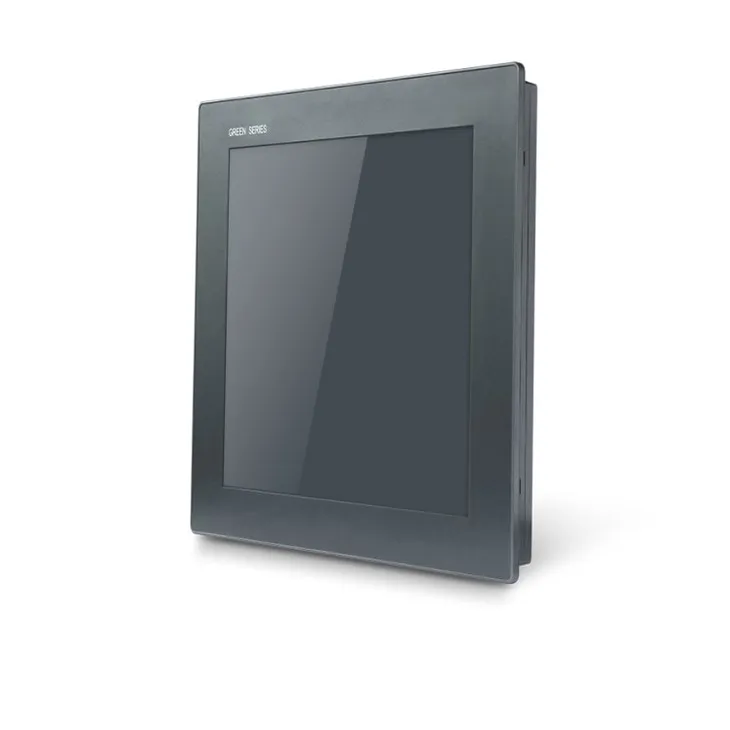
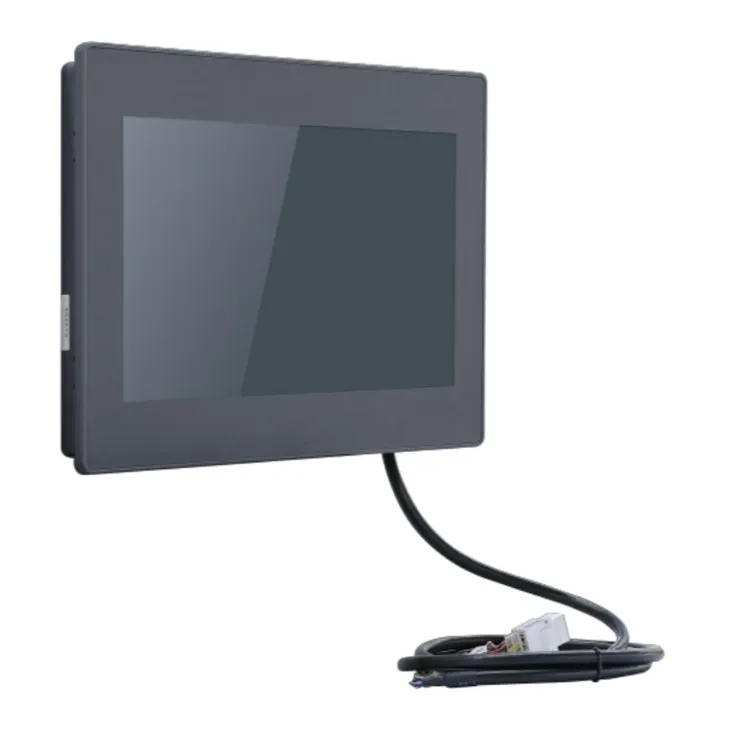
An [Internet Of Things Touch Screen](/hmi/industrial - hmi/internet - of - things - touch - screen.html) offers a more intuitive and user - friendly interface for interacting with the IoT gateway. It allows users to perform operations by simply touching the screen. Touch - screen interfaces are widely used in smart home and commercial IoT applications. They can display real - time data, system status, and provide a graphical user interface (GUI) for easy configuration and control.
Waterproof Touch Screen
In environments where water or moisture is a concern, a [Waterproof Touch Screen](/hmi/industrial - hmi/waterproof - touch - screen.html) is an ideal choice. These touch screens are designed to resist water ingress, ensuring reliable operation in wet conditions. They are commonly used in outdoor IoT applications, such as smart agriculture and environmental monitoring.
Security Components
Firewall
A firewall is a crucial security component in an IoT gateway. It monitors and controls incoming and outgoing network traffic, preventing unauthorized access to the gateway and the connected devices. Firewalls can be configured to allow or block specific types of traffic based on predefined rules. For example, a firewall can block all incoming traffic from untrusted IP addresses, protecting the IoT system from external attacks.
Encryption
Encryption is used to protect the data transmitted between the IoT gateway and other devices or systems. It ensures that the data is secure and cannot be intercepted or tampered with during transmission. Symmetric and asymmetric encryption algorithms are commonly used in IoT gateways. Symmetric encryption uses a single key for both encryption and decryption, while asymmetric encryption uses a pair of keys (public and private keys).
Authentication
Authentication is the process of verifying the identity of users, devices, or systems. In an IoT gateway, authentication mechanisms are used to ensure that only authorized users and devices can access the gateway and its resources. Password - based authentication, digital certificates, and biometric authentication are some of the common authentication methods used in IoT gateways.
In conclusion, an IoT gateway is a complex system composed of multiple components, each playing a vital role in its overall functionality. As an IoT Gateway supplier, we are committed to providing high - quality gateways that incorporate the latest technologies and features. Whether you are looking for a gateway for industrial automation, smart home, or other IoT applications, we have the right solution for you. If you are interested in our products or have any questions, please feel free to contact us for a procurement discussion.
References
- “Internet of Things: A Survey,” by Luigi Atzori, Antonio Iera, and Giacomo Morabito
- “Industrial Internet of Things: Challenges, Opportunities, and Directions,” by Fei Tao, Qi - Hua Huang, and Li - Feng Sun
- “IoT Gateway: An Overview,” by various industry whitepapers and research reports.