
As a Siemens HMI supplier, I've had the privilege of working closely with a wide range of Siemens HMI models. Over the years, I've seen firsthand how these devices play a crucial role in industrial automation, offering operators intuitive control and monitoring capabilities. In this blog post, I'll delve into the differences between various Siemens HMI models, helping you understand which one might be the best fit for your specific needs.
Siemens Basic HMI
Let's start with the Siemens Basic HMI. These models are designed for straightforward applications where simplicity and cost - effectiveness are key. They are ideal for small - scale automation projects or applications with limited functionality requirements.
The Siemens Basic HMI series features a compact design, making them easy to install in tight spaces. They come with a range of screen sizes, typically from 4 inches to 12 inches, allowing you to choose the one that suits your workspace and visibility needs.
In terms of functionality, Basic HMI models offer basic visualization and control features. They can display simple graphics, text messages, and process values. You can use them to monitor temperature, pressure, and other process variables, as well as to control basic functions such as starting and stopping motors.
The programming of Basic HMI models is relatively easy. Siemens provides user - friendly software tools that allow you to create simple screen layouts and define basic interactions. This makes it accessible for operators and technicians with limited programming experience.
However, due to their basic nature, these models have some limitations. They may not support complex graphics or advanced communication protocols. If your application requires high - end visualization or integration with multiple systems, you might need to look at other models.
Siemens Standard HMI
Moving up the ladder, we have the Siemens Standard HMI models. These are more feature - rich than the Basic HMI and are suitable for medium - sized to large - scale industrial applications.
One of the significant improvements in Standard HMI models is the enhanced graphics capabilities. They can display high - resolution images, 3D graphics, and animated sequences. This is particularly useful for applications where detailed visualization of the production process is required, such as in the automotive or food and beverage industries.
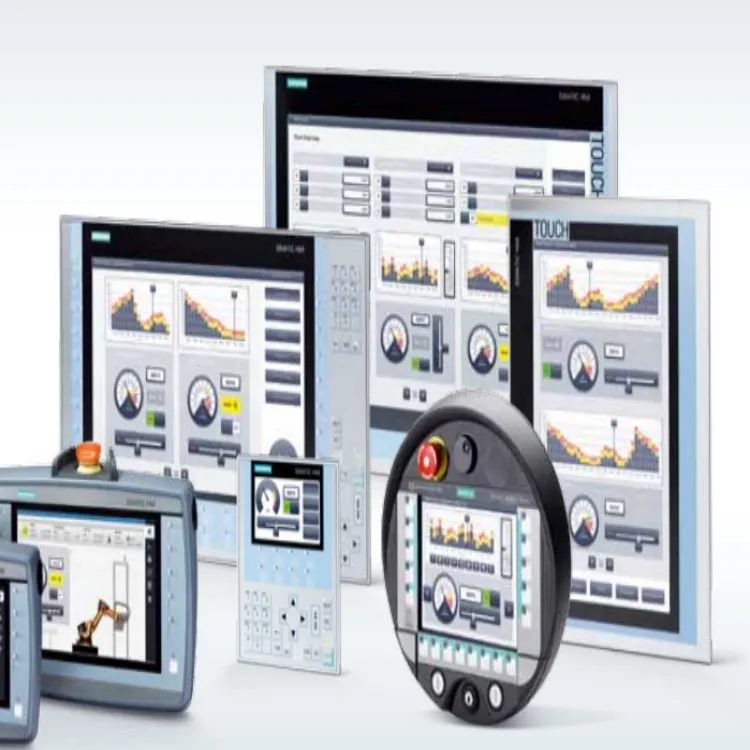
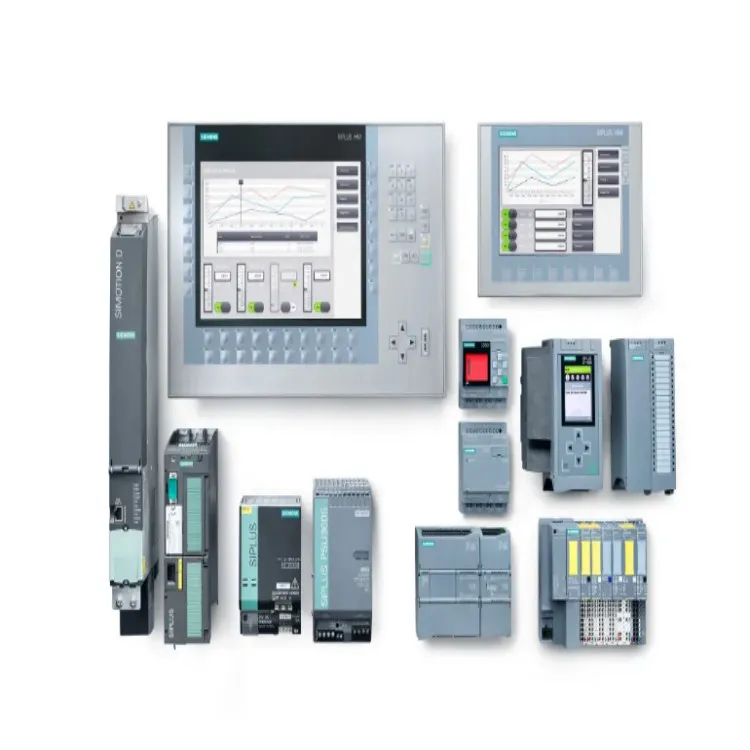
Standard HMI models also offer better communication options. They support a wider range of industrial protocols, including Profibus, Profinet, and Ethernet/IP. This allows for seamless integration with other automation devices, such as programmable logic controllers (PLCs), sensors, and actuators.
In addition, these models come with more advanced security features. They can implement user - based access control, ensuring that only authorized personnel can access sensitive functions. This is crucial for industries where security and safety are of utmost importance.
The programming of Standard HMI models is more complex than that of Basic HMI models. Siemens' programming software provides more advanced tools for creating complex screen layouts, implementing data logging, and setting up alarms. While it requires a higher level of programming skills, the additional functionality justifies the learning curve.
Siemens Advanced HMI
The Siemens SIMATIC HMI Advanced models represent the top - of - the - line in Siemens' HMI portfolio. These are designed for the most demanding industrial applications, where high - performance, reliability, and advanced functionality are essential.
Advanced HMI models offer the highest level of graphics performance. They can handle real - time 3D simulations, virtual reality (VR) and augmented reality (AR) applications. This is revolutionary for industries such as aerospace and heavy machinery, where operators need to have a detailed and immersive view of the production process.
In terms of communication, Advanced HMI models support the latest industrial communication standards and can handle high - speed data transfer. They are also capable of integrating with cloud - based systems, enabling remote monitoring and control.
Another key feature of Advanced HMI models is their scalability. They can be easily expanded to meet the changing needs of your application. You can add more screens, increase storage capacity, or upgrade the software without significant hardware changes.
The programming of Advanced HMI models is highly sophisticated. Siemens provides a comprehensive suite of programming tools that allow for the creation of complex, custom - tailored applications. However, this also means that a team of experienced programmers is usually required to fully utilize the capabilities of these models.
Comparison of Key Features
To summarize the differences between these models, let's look at a comparison of some key features:
| Feature | Siemens Basic HMI | Siemens Standard HMI | Siemens Advanced HMI |
|---|---|---|---|
| Screen Size | 4 - 12 inches | 4 - 22 inches | 7 - 24 inches |
| Graphics Capability | Simple graphics | High - resolution, 3D graphics | Real - time 3D, VR/AR |
| Communication Protocols | Limited | Wide range | Latest standards, cloud integration |
| Security Features | Basic | Advanced | High - end, scalable |
| Programming Complexity | Low | Medium | High |
| Cost | Low | Medium | High |
Choosing the Right Model
When choosing a Siemens HMI model, you need to consider several factors. First, assess the complexity of your application. If you have a simple, small - scale project, a Basic HMI might be sufficient. For medium - sized projects with more demanding visualization and communication requirements, a Standard HMI would be a better choice. And for large - scale, high - performance applications, an Advanced HMI is the way to go.
Budget is also an important consideration. Basic HMI models are the most cost - effective, while Advanced HMI models come with a higher price tag. However, you need to balance the cost with the functionality and long - term benefits.
Finally, consider the skills of your in - house team. If your team has limited programming experience, a model with easier programming requirements might be more suitable. On the other hand, if you have a team of experienced programmers, you can take full advantage of the advanced features of the higher - end models.
Contact for Procurement
If you're interested in purchasing Siemens HMI models or need more information about which model is right for your application, I'm here to help. As a Siemens HMI supplier, I have in - depth knowledge of these products and can provide you with expert advice. Whether you're looking for a basic solution for a small project or a high - end advanced HMI for a large - scale industrial application, I can assist you in making the right choice. Reach out to me, and let's start a discussion about your specific needs.
References
- Siemens official product documentation
- Industrial automation industry reports
- Technical articles on Siemens HMI technology