
Hey there! As a supplier of DC servo motors, I often get asked about the starting torque of these motors. So, I thought I'd write this blog to break it down for you.
Let's start with the basics. The starting torque of a DC servo motor is the torque it can generate when it starts from a standstill. It's a crucial parameter because it determines how well the motor can overcome the inertia and friction of the load it's connected to. In simple terms, if you've got a heavy load, you need a motor with a high starting torque to get it moving.
Think about it like this: you're trying to push a big, heavy box. If you're weak, it'll be really hard to get that box moving. But if you're strong, you can give it a good shove and get it going. The same principle applies to DC servo motors. A motor with a high starting torque can easily start a heavy load, while one with a low starting torque might struggle or even fail to start it.
Now, how is the starting torque of a DC servo motor determined? Well, it depends on a few factors. One of the main factors is the motor's design. Motors with a larger diameter and more windings generally have a higher starting torque. This is because they can generate more magnetic force, which in turn creates more torque.
Another factor is the voltage applied to the motor. When you first start a DC servo motor, you can apply a higher voltage to it. This extra voltage helps to generate a higher starting torque. However, you've got to be careful not to apply too much voltage, as it can damage the motor.
The type of load also plays a role. If the load has a high inertia, like a large flywheel, it'll require more torque to start. On the other hand, if the load has a low inertia, like a small fan, the motor won't need as much starting torque.
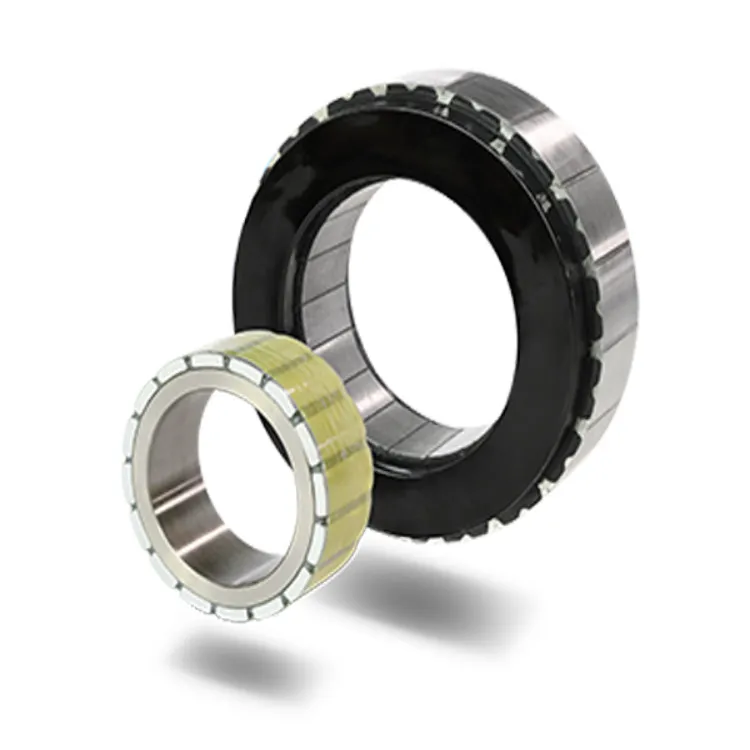
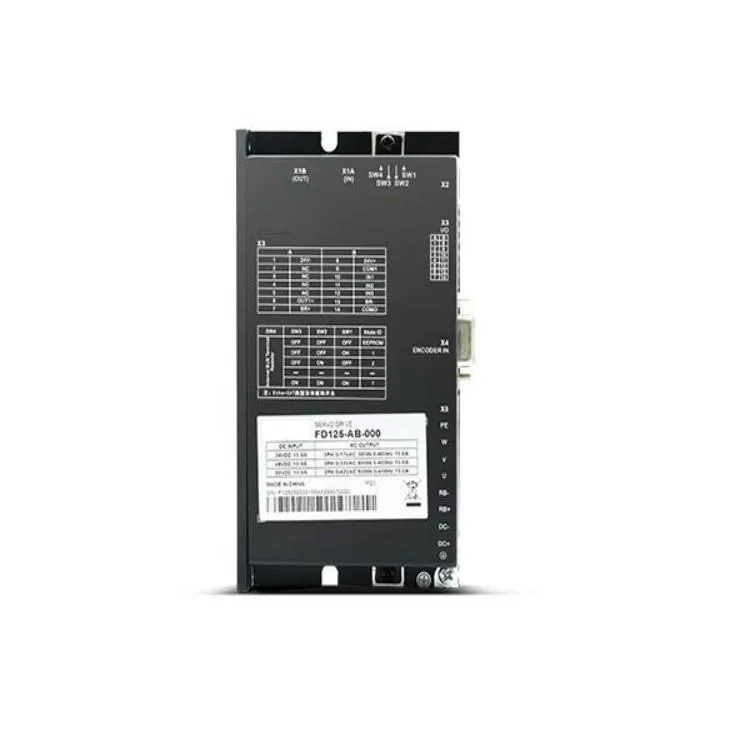
At our company, we offer a wide range of DC servo motors with different starting torques to meet various application needs. For example, if you're looking for a motor with a high starting torque for heavy-duty applications, you might be interested in our Frameless Torque Motor. These motors are designed to provide high torque right from the start, making them ideal for applications like industrial machinery and robotics.
If you've got a more compact application where space is limited, our Integrated Servo Wheel could be a great choice. Despite their small size, these motors still offer a decent starting torque, making them suitable for things like automated guided vehicles and small-scale robotics.
And for applications where you need to operate the motor at a low voltage, our Low-voltage Servo Motor is the way to go. These motors are designed to provide a sufficient starting torque even at low voltages, which is useful for battery-powered devices and other low-power applications.
When it comes to choosing the right DC servo motor for your application, it's important to consider the starting torque requirements. You don't want to end up with a motor that's too weak to start your load, but you also don't want to overspend on a motor with more starting torque than you actually need.
If you're not sure which motor is right for you, our team of experts is here to help. We can analyze your application requirements and recommend the best motor for your needs. We've got years of experience in the industry, and we know how to match the right motor to the right application.
In conclusion, the starting torque of a DC servo motor is a critical factor in determining its performance. It's influenced by the motor's design, the applied voltage, and the type of load. By understanding these factors and choosing the right motor, you can ensure that your application runs smoothly and efficiently.
If you're interested in learning more about our DC servo motors or have any questions about starting torque, don't hesitate to reach out. We're always happy to have a chat and help you find the perfect motor for your project. Whether you're a small business owner looking for a motor for a new product or an engineer working on a large-scale industrial application, we've got the solutions you need.
So, what are you waiting for? Contact us today and let's start the conversation about your DC servo motor needs.
References
- Principles of Electric Machines and Power Electronics, P. C. Sen
- Electric Motors and Drives: Fundamentals, Types and Applications, Austin Hughes